• Skip to primary navigation
  • Skip to main content

My Lifestyle Dream

The journey of a thousand miles begins with one small step

  • Home
  • Print on Demand
  • Website Monetization
  • Dropshipping
  • Matched Betting
  • Social Trading
  • Blog
  • Travel
  • About

Travel

The Ultimate Guide to the Navimag Ferry | Patagonia, Chile

19th May 2019 By martinos74 Leave a Comment

navimag ferry patagonia

We just got back from a 4 day ferry journey from Puerto Montt to Puerto Natales on the Navimag ferry.

We chose the cheapest option which was a bunk bed in a 22 bed room and the weather for the 4 day trip was pretty much as bad as it could be, however, I would still totally recommend the trip and think the $400 fee was well worth the money.

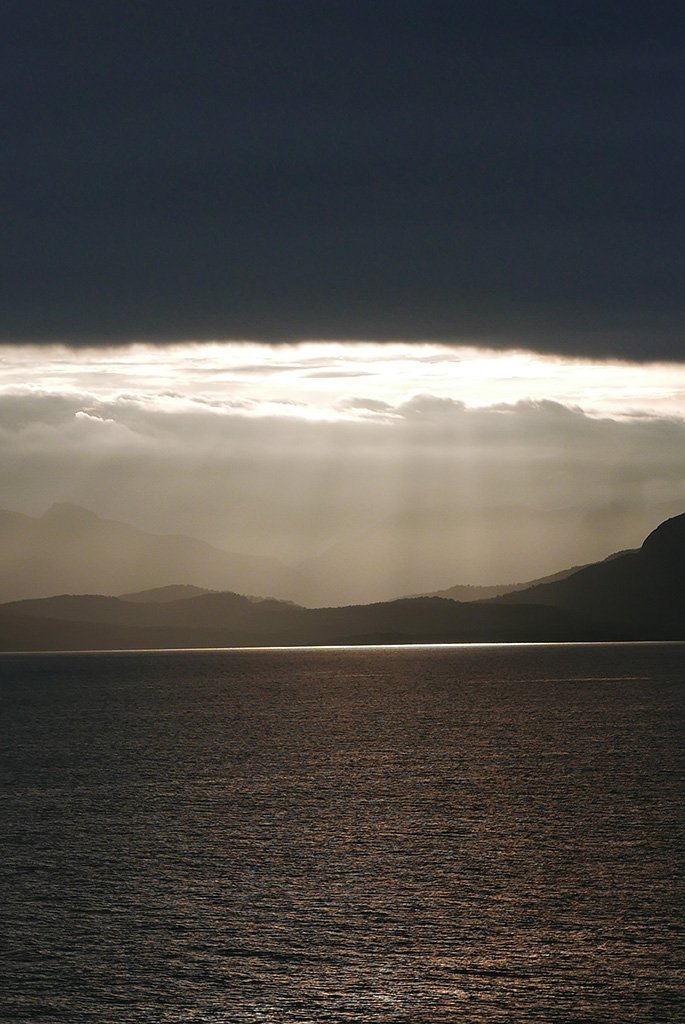
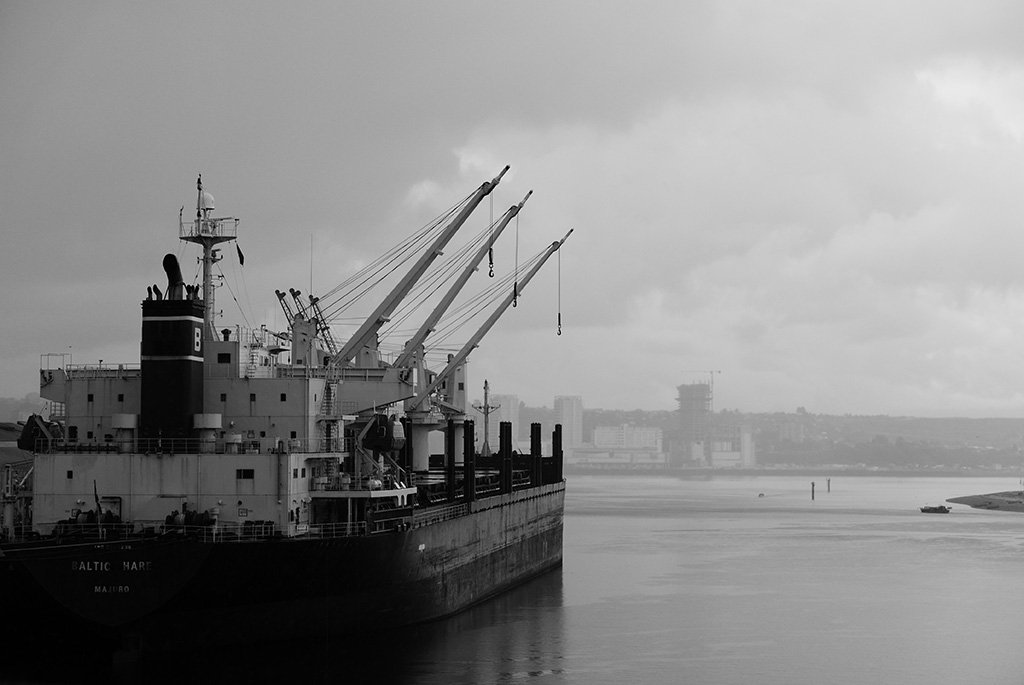
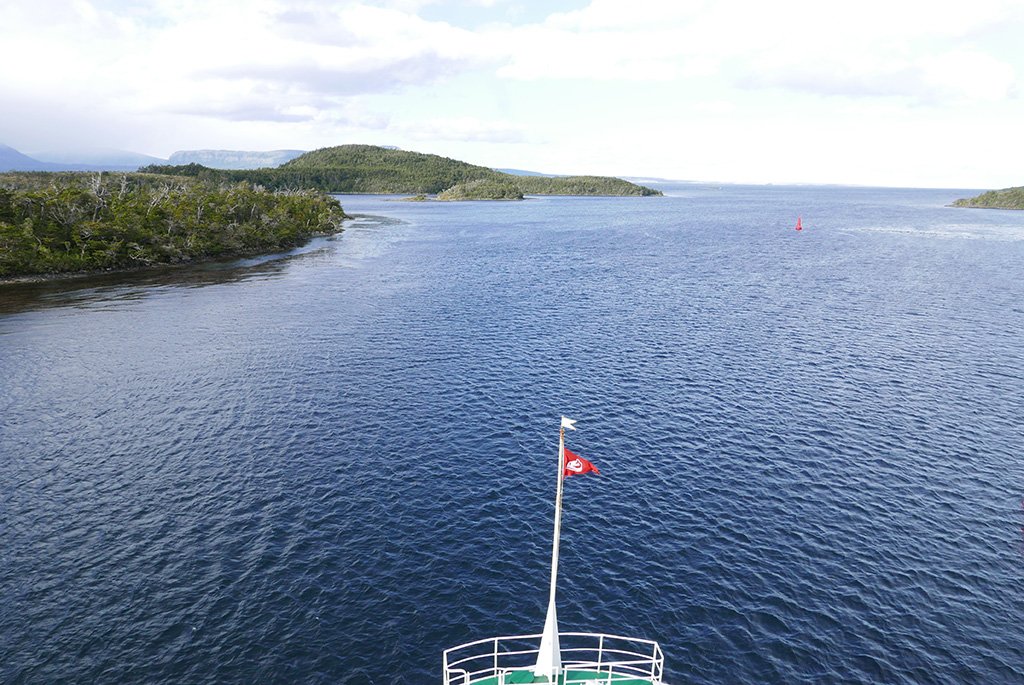
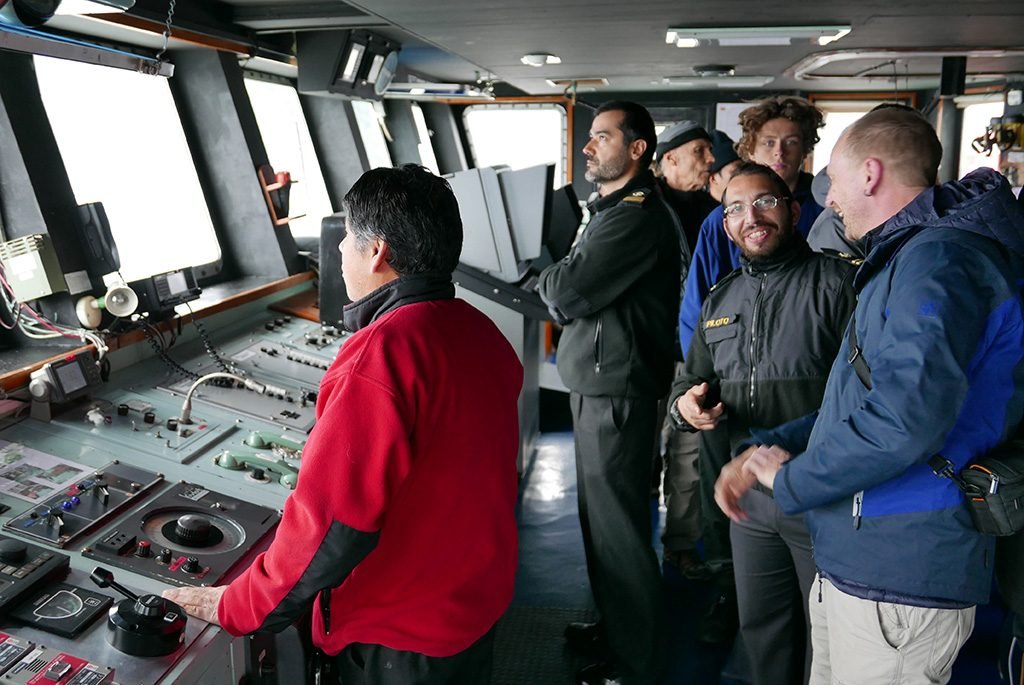
Here are some of the best bits:

There were a number of questions that I had before I went or things I’ve learned on the trip that should help to decide if you’d like to take this trip as well:

What is the Food Like?

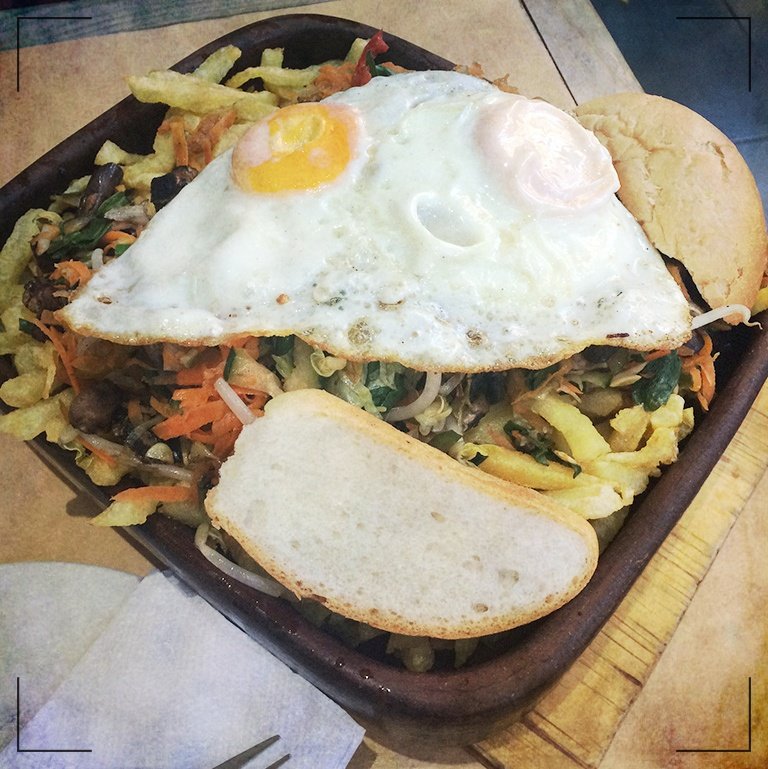
Well one thing for sure is that you won’t starve on this trip as portions are typically Chilean style large and you are given 3 big meals a day.

  • Breakfast is served from 8-9:00 am and consists of toast, ham, jam, a selection of cereals, fruit, nescafe coffee and juices, which are served in a self serve buffet.
  • Lunch is served at 12.30, which was pretty early for me and was usually made up of a soup, a main course and some kind of postre.
  • Dinner was between 7 and 8 and was a three course meal as well.

My girlfriend is a vegetarian and they also cater for any kind of food allergies as long as you let them know when you get on the ferry

The food wasn’t the best in the world to be honest, but remember we’re not on a cruise ship and you’re definitely not going to go hungry!

The other nice thing is that you can help yourself to hot drinks, juices and water all day long.

How many People are on the Ferry?

I’m not sure but I think there was a capacity of 120 guests on the ferry, however, it never felt crowded at all. There was plenty of room on the decks, in the cafeteria and the lounge area and you never had to queue for showers/toilets.

The food queue was also really small and service was excellent all round.

Is Drinking Water Provided?

Yes, in the cafeteria area there are water coolers that are open 24 hours.

What are the Staff Like?
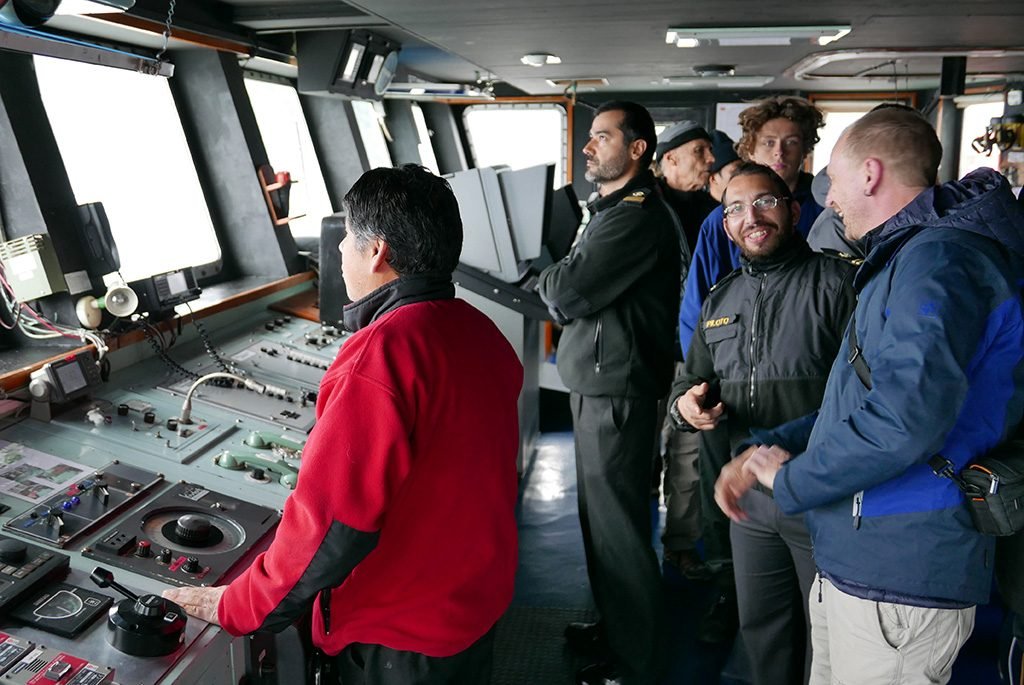
All the staff on board from the cleaners, food servers, guides and working staff were extremely nice, helpful and always smiled and said hello to you.

Are the Toilets / Showers Clean?

The toilets and showers were always clean and the good news was that there was plenty of hot water. The only annoying thing was the button you had to keep pressing to get more water from the shower, but otherwise I couldn’t fault it.

Will it be Cold on the Ship?
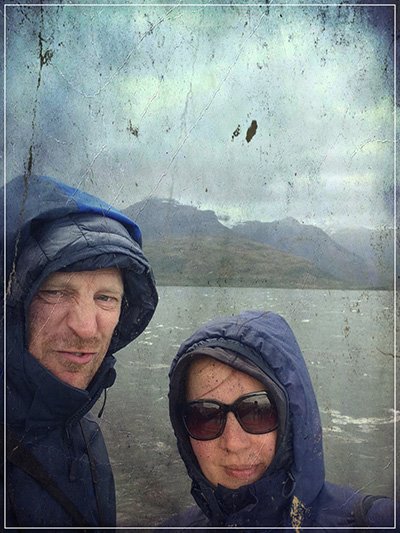
It’s Gonna be Cold!

Whatever time of year it is you’re going to need a good waterproof coat and some warm fleeces underneath when you’re on deck as there is always going to be the biting Patagonian wind to contend with. Make sure you take a hat and gloves as well for extra protection and plenty of sun block.

Inside of the ship it’s warm and there were plenty of covers on my bed to keep me warm at night

Where do you Keep your Bags?

Backpacks being loaded on at the start of the trip

Next to your bed you will get a big locker which has a key and has enough room to fit a 65 litre rucksack. I actually had my rucksack, small guitar and a day pack which all managed to be stored in this locker.

What are the Dormitories Like?
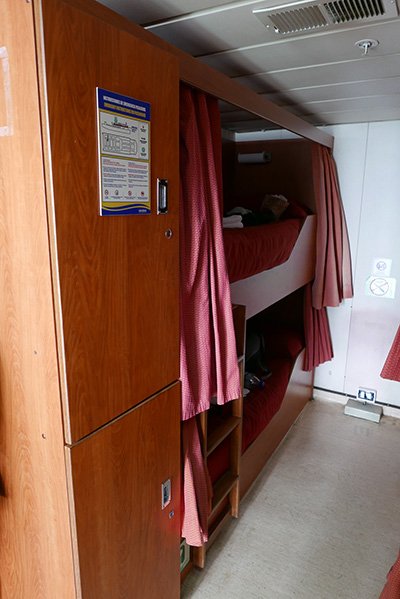
The dorms are basic but actually fine for the price. We were in the 22 bed area, however, this is split down into sections of 4 beds.

Each bed has a curtain that you can block yourself off in, a reading light and a charging socket, so its actually pretty cosey.

Are the any Communal Areas?

There were 3 main communal areas on the ship that could be accessed 24 hours:

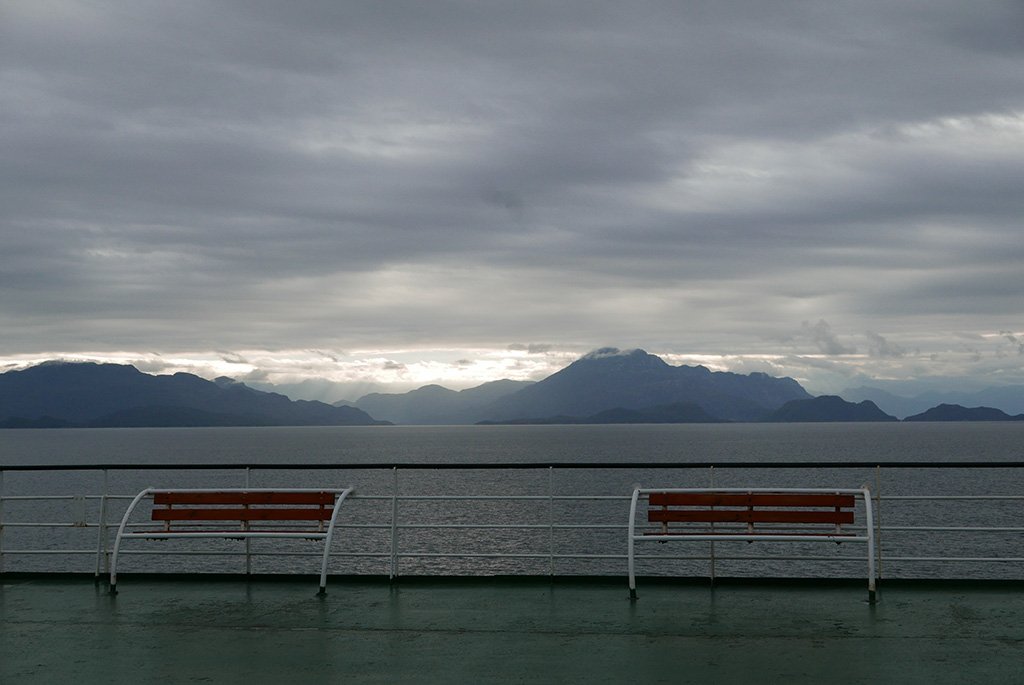
  • The deck – Passengers have a large area on both the front of the ship, the back and on both sides of the ship where benches are provided
  • The Cafeteria – Large area with tables and chairs, tea, coffee, water and the buffet for your meals
  • The bar/lounge – This area is on the upper deck and has comfortable chairs, bean bags and the bar… which is not really a bar as it only provides soft drinks! This is where most of the entertainment is provided.

Entertainment

  • Captains Bridge
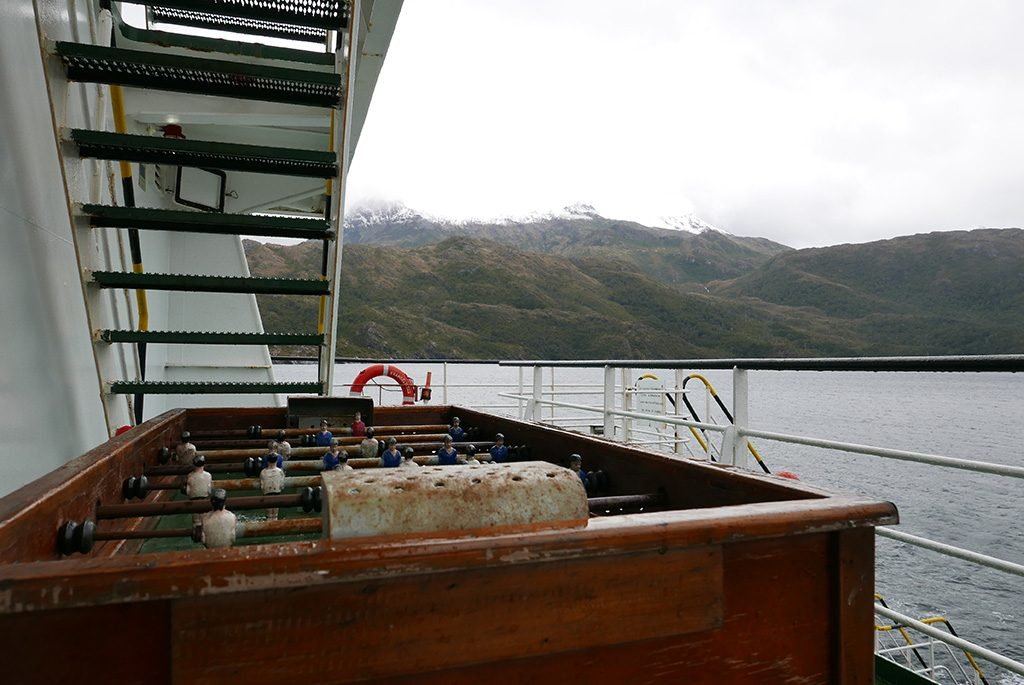
  • Table Footie
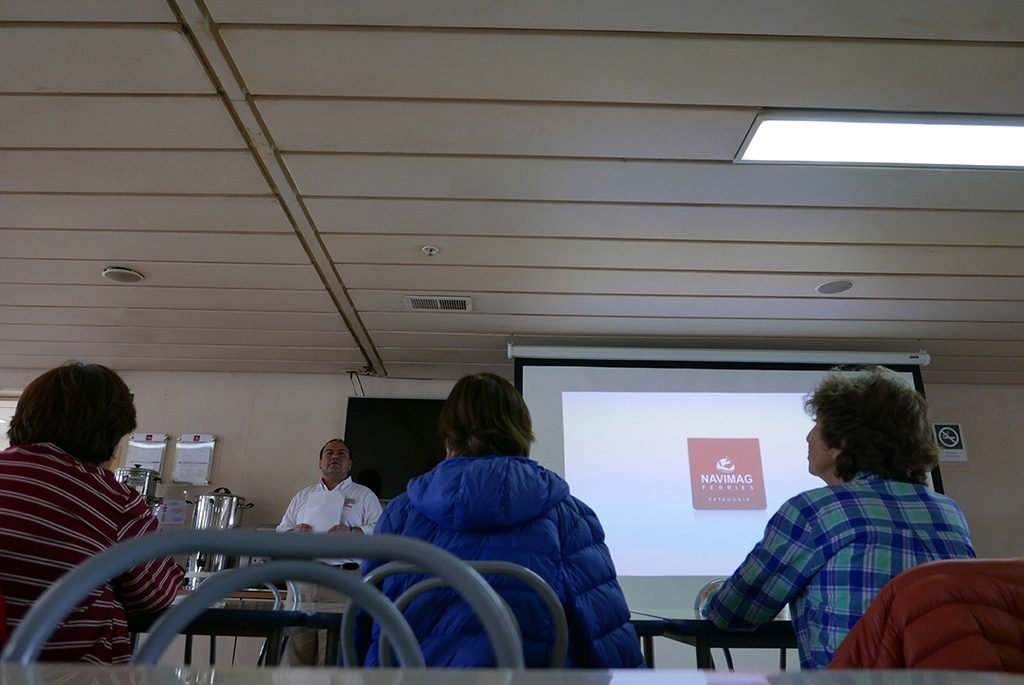
  • Daily Talks
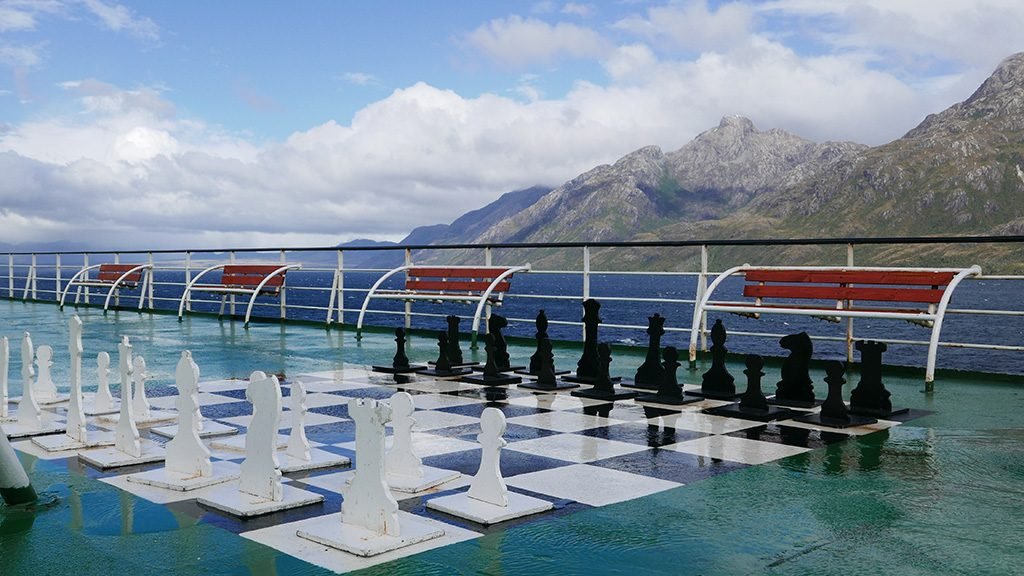
  • On Board Chess

During our trip there were talks each day, either about the route we were going to take, about the flora and fauna and even a talk about mate.

There were 2 yoga classes each day, which was a great way to unwind. Unfortunately the weather wasn’t great on our trip so we had to take these classes in the lounge area, however, in good weather you’d do this on deck, which would be amazing.

Each evening they also put a Chilean film on in the lounge area and on the final night there was a bingo night as well.

The other activity is that you get to go up to the bridge, meet the Captain and some of the crew and look at how they operate the ship, which is quite interesting.

Can you drinkg Alcohol on Board?
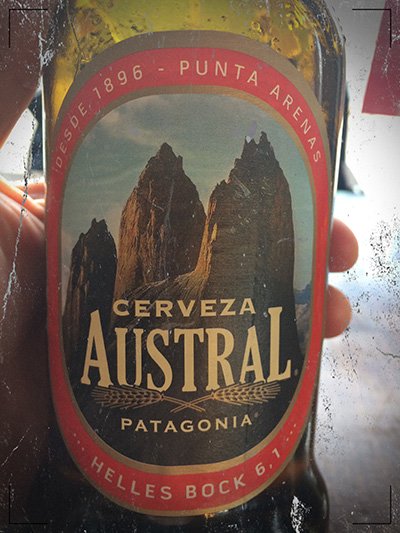
I had some friends who went on this trip a few years ago, and told me that there was a bar and a party each night and that I should take some rum with me as well… However, it seems that an incident occured on board where there was a fire and this was linked with alcoholic activities, so alcohol is strictly forbidden on board.

You can’t buy it anywhere on board and you’re not allowed to drink your own supply either. That being said we still snuck a bottle of rum on board, which we descretely drank, and I think if you have your own cabin there’s no harm in bringing a few tipples on board!

Is Smoking Allowed?

Yes, you can smoke anywhere on deck, however, of course smoking is prohibited in enclosed areas.

Should you go if you get Sea Sick Easily?

Well, on the second night, you are likely to have a rough sea crossing as you head on out into the open waters around Anna Pink.

ust after your evening meal the crew will give you sea sickness pills if needed, although these are likely to make you quite drowsy.

The rough part of the trip is going to last about 8 hours through the night, so if you get sea sick easily it’s probably best to take these tablets.

My girlfriend is easily sea sick, however, managed to survive without problems, and I didn’t see too many people suffering even though the boat was moving around quite a lot.

I don’t get seasick but found it hard to sleep as I was rocking around in my bunk imagining huge waves outside and that we were going to sink any second… in the morning I had a look outside when the boat was still rocking around and the waves were actually quite small, so this was all in my head!!!

What are the Weather Conditions Like?

Well, you are travelling through Patagonia so it is going to be cold, very windy and rainy as well.

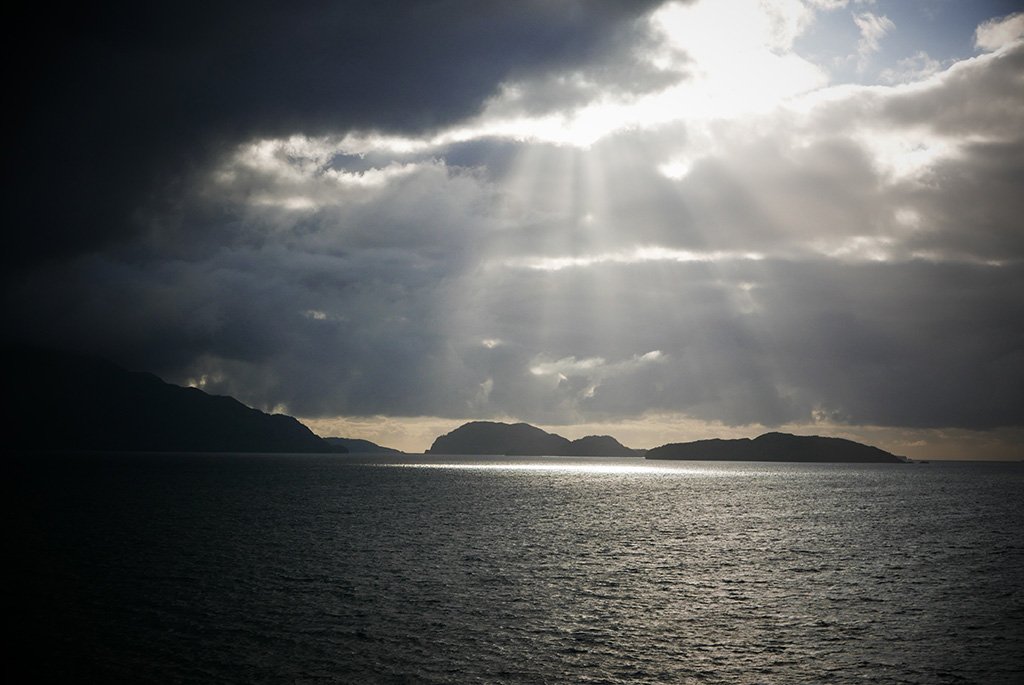
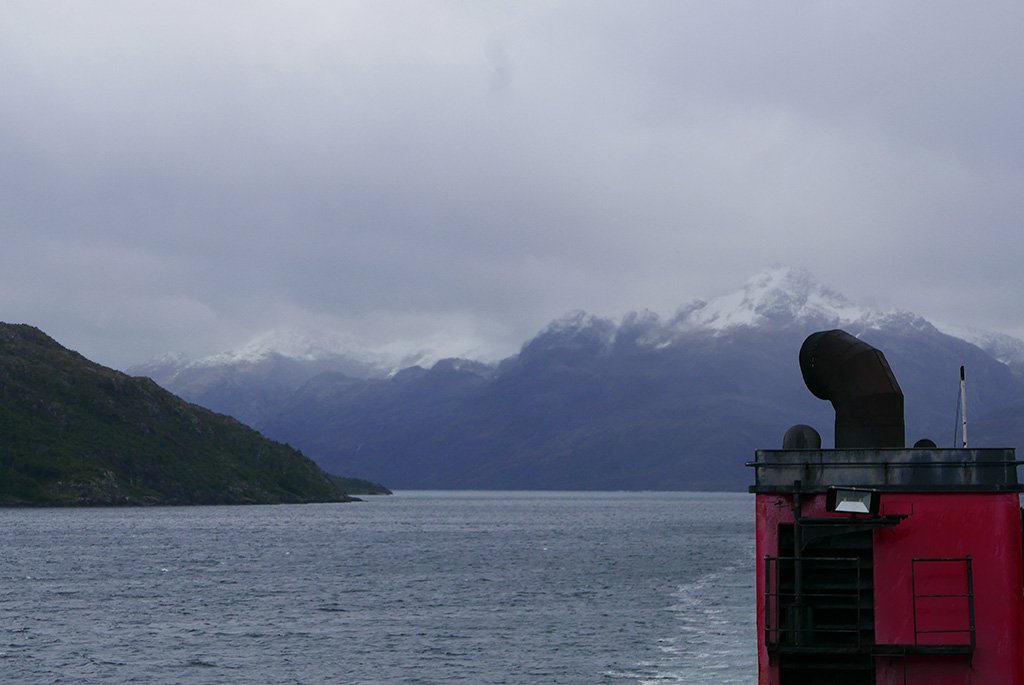
Unfortunately for our trip 90% of the crossing we were surrounded by mist and fog so we couldn’t see much at all. However, in the short time that the sun came out, the scenery was simply breathtaking.

Just come prepared for all weather conditions and have a mindset that the weather will be bad and cloudy because anything you see after that will be a bonus.

I spent a lot of the time thinking about how amazing it would be if the weather was great, so a different mindset is needed. To be honest though, the mist and fog made the trip really atmospheric and I still had a fantastic time slowly passing through the fyords without and of the distractions of the modern world around me.

Is Internet Available?

No, there’s no wifi on board and you won’t get a phone signal until you’re back in Port, apart from maybe a brief signal at Puerto Aden. In my view this is a good thing as it really gives you time to switch off.

Are Delays Likely?

Yes. When you book this trip make sure you give yourself at least a day’s buffer before doing any other activities on the other side.

There are a number of things that can hold up the passage…

The weather needs to be good, you need to be at certain places at a certain time in order to make the tides, and even docking in Puerto Natales can take hours as even with a slight wind it’s really difficult to dock in the Port.

We had to wait about 3 hours on arrival in order to get off the ship, so be prepared for delays.

What Wildlife will I See?

Of course, it’s a complete lottery to what you can see and hanging around on deck as long as possible is going to give you the biggest chance of spotting some wildlife.

The good news is that as there are a lot of people on board, if there is something to see, someone is likely to spot it and the news spreads quickly around the ship.

For example, I was upside down in a yoga class doing the downward dog, when people started leaving one by one to go out on deck. We ran and joined them to witness the spectacle of a Mother with her baby Orca Whale jumping out of the water…

There’s also a good chance that you’ll spot some hump back whales, or at least like we did you’ll see and hear them expressing air through their blow holes.

Seals and sea lions will accompany you for a large part of the trip and if you’re lucky you’ll pick up a squad of passing dolphins as well.

If you’re a twitcher as well then there’s a wide variety of birdlife that you can see from the ship, the most famous being the huge-winged Albatross.

If you liked this article, then why not PIN IT as well!!!

Filed Under: Travel Tagged With: chile, south-america

9 Strange Things Found Only in Chile : Chilean Culture Exposed

18th May 2019 By martinos74 Leave a Comment

9 Strange Things Only in Chile

Every country has its nuances and annoyances and Chile, even though it has a lot of cultural similarities to what I know in the UK and the western world, there are a number of common themes that I’ve noticed in my time travelling here.

Eating like a Roman

I think it’s fair to say that Chilean people aren’t exactly the slimmest people on earth, and this can be put down to their passion for both sugar and large portions.

At every opportunity you will see people trying to add extra spoons of sugar to things that really don’t need it.

Unless you want to get immediate diabetes then I’d stay clear of the fruit juices in particular, where I’ve seen vendors adding 5 or more spoons of sugar to a single juice.

There’s really no need for this as the fruit is amazingly sweet and delicious anyway, and you’ll get a few strange looks if you ask for ‘sin azucar‘

This level of indulgence is also seen in most restaurants where portion sizes are super sized all around, and most of the food doesn’t appear to be too healthy.

Most popular seems to be meat (usually barbequed) accompanied with a massive portion of chips and usually an egg on top as well.

A lot of the time it’s common to share your food so on the menu you’ll often find portions for 2 people.

BE CAREFUL, however, as this isn’t always clearly marked and you can easily end up with a plate of 2 supersized portions for yourself.

No Beer in Public

As an Englishman who likes his beer served up at any time of day in all kinds of places, I’ve been struggling a few times over here to keep myself suitably oiled.

In particular the beach location seem to be missing a trick or too. Along the beachfronts you’ll find enless shacks and stands selling helados, churros (a kind of waffle-like stick) and chocolate, sweet popcorn and sickly sweet juices, but can you find anywhere selling a nice cold, refreshing beer on a sunny day? No, No and No!!!

Generally the attitude to alcohol in Chile is that it should be consumed in moderate portions (unlike the food) and public displays of drunkenness are frowned upon (the polar opposite of the UK!).

It’s not legal to drink in public spaces, although we’ve seen a few people taking sneaky sips of beer in the park, and I’m guessing that there’s a law prohibiting the sale of alcohol on the ‘costanera’ or sea front.

I was thinking of drafting a letter to the Governor of Chile, to let him know about the benefits of mass alcohol consumption in the sunshine… then I remembered the scenes of drunken yobs with burned red faces rolling around the beaches of the UK on a hot day and thought that maybe they’ve got the better idea!

Walking like a Roadblock

OK, I have to admit it, but coming from London, I’m used to walking fast and often suffer from pedestrian rage.

Most of the time in London, the streets are busy and people generally move out of the way if you’re in a hurry, unless they’re bimbling along zoning out in a zombified state on their iPhones.

However, Chile is a completely different ball game. Even in Santiago you’ll find that people will at a push saunter along, but generally will walk at a sub-snail’s pace.

In itself, this doesn’t bother me. I understand that it’s hot out and the pressure on time isn’t quite as intense. However, if you’re going to limp along the streets at a sloths pace, then don’t block the whole pavememt so that no one can get passed you.

And if you notice that someone is behind you, surely you’d make way for them and let them pass wouldn’t you???

No, No, No, not here. They’ll keep on slothassing their way along the street until the sun comes down. OK, I’m ranting, I know I should adapt and slow down, blah, blah, blah, but sometimes you just want to get somewhere in a bit of a hurry.

The Coolest, Cutest Dogs

In most countries that I’ve visited street dogs can be a pain in the ass. In the worst case they can be agressive, especially late at night when they like to gang up on you, and in the best case, just annoying as they beg for food at your table. In Chile, however, they seem to be completely chilled out, friendly and actually just enjoy being around humans.

I think actually, it’s because they’re super clever and have realised that ‘cold’ begging for food isn’t the best way to get results. They’ve notched it up a gear and have figured out that first of all they should befriend the humans to get their trust, chill out with them for a bit and sooner or later the humans will need to eat, and will generally want to give you some of their food!

There’s also a programme here in Chile where all street dogs have to be chipped, and the different ‘barrios’ or neighbourhood all have their own set of dogs that they look after.

On most streeets when it’s a hot day you’ll see bowls of water that have been left for the street dogs and generally, people are really nice to the dogs here.

They are fairly well groomed, and look in good health, which is probably why they’re so relaxed and happy.

Locks

Maybe I’ve just been unlucky with this one, but never have I been to a country before where I’ve had so many problems opening and locking doors.

Most guesthouses seem to have a completely different and unfathomable locking system on your door and most of them seem virtually impossible to do the one thing they were designed for… to lock the freakin’ door.

My top tip would be to ask the host at the guesthouse to show you exactly how they lock and unlock the door whilst they are there with you, and then give it a go yourself to save you hours of pain and embarrassment later on.

There is actually a reason behind this madness as well… because the night and day temperatures are so extreme the wood on the doors expands and contracts a lot causing the lock to become misaligned. Another big factor for this is the next topic …. earthquakes

Earthquakes

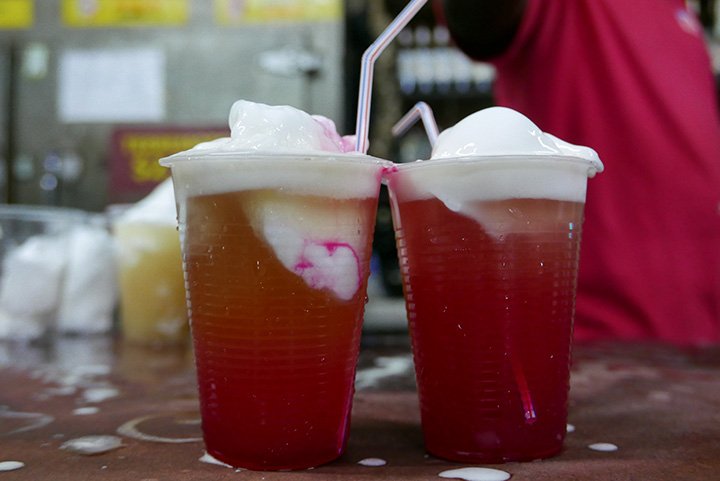
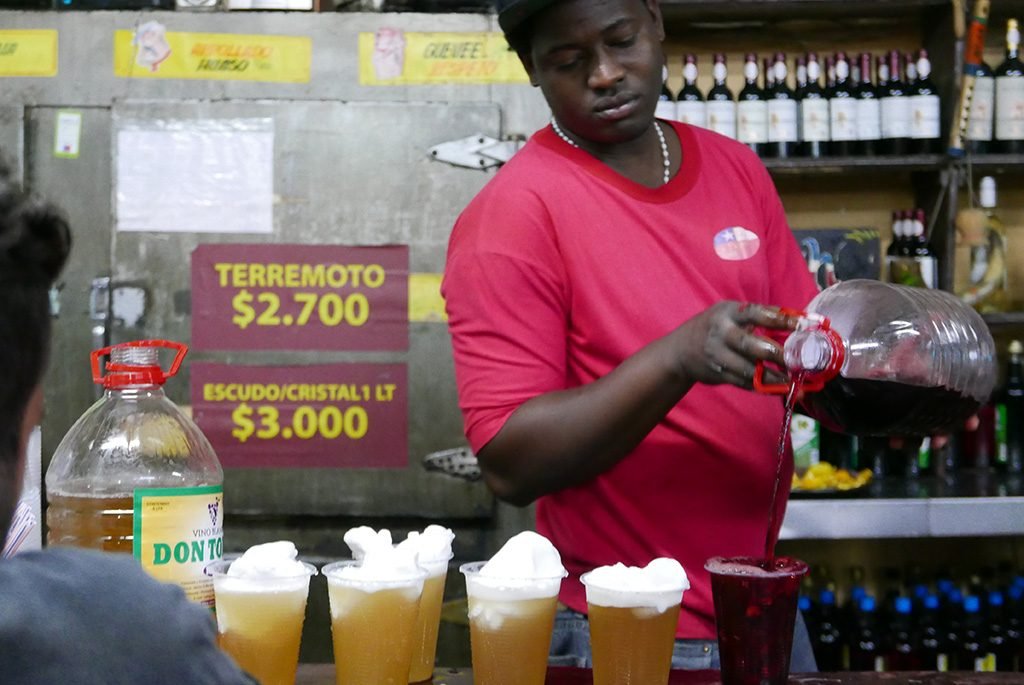
Chile's infamous 'Terramotto' or earthquake cocktail
Chile’s infamous ‘Terramotto’ or earthquake cocktail

In Chile earthquakes are as common as colds and due to the overactive teutonic plates the country experiences almost daily earthquakes of different sizes.

In recent years there have been huge earthquakes across Chile including the strongest earthquake in history which was recorded at 9.5 on the Richter scale in Valdivia in 1960, which is why you’ll find a lot of houses made from wood across most of Chile as well as Tsunami evacuation routes flagged up in most coastal towns and cities.

A local guide told us that if you here a slight tremor then most Chileans won’t even react to this, if the tables start moving then they may slightly raise an eyebrow. The key is to watch for their reaction, so if they fling themselves to the floor and start praying, then you should probably follow suit.

Earthquakes are so much part of Chilean culture that they even named a cocktail after an earthquake, which was made out of the only things left on the shelf in a Santiago bar after a big earthquake. Try a few of these and your legs really will be shaking!

Street Art

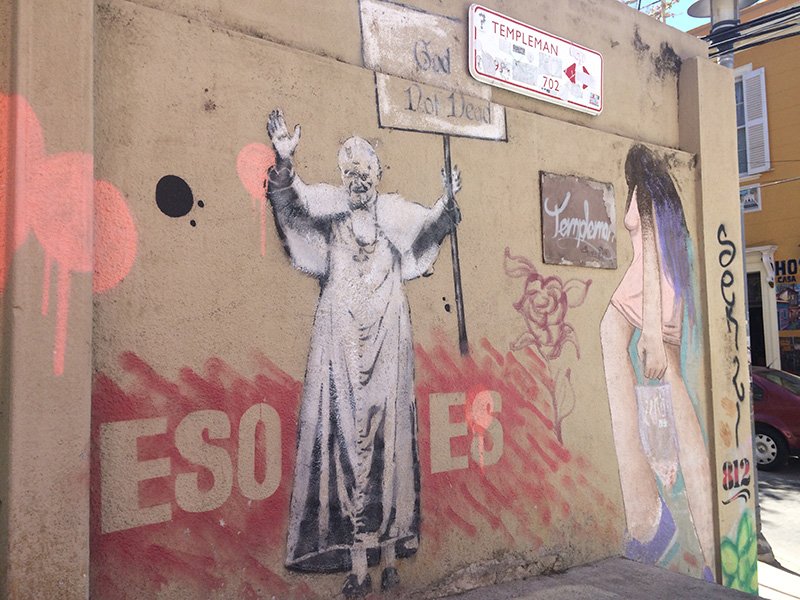
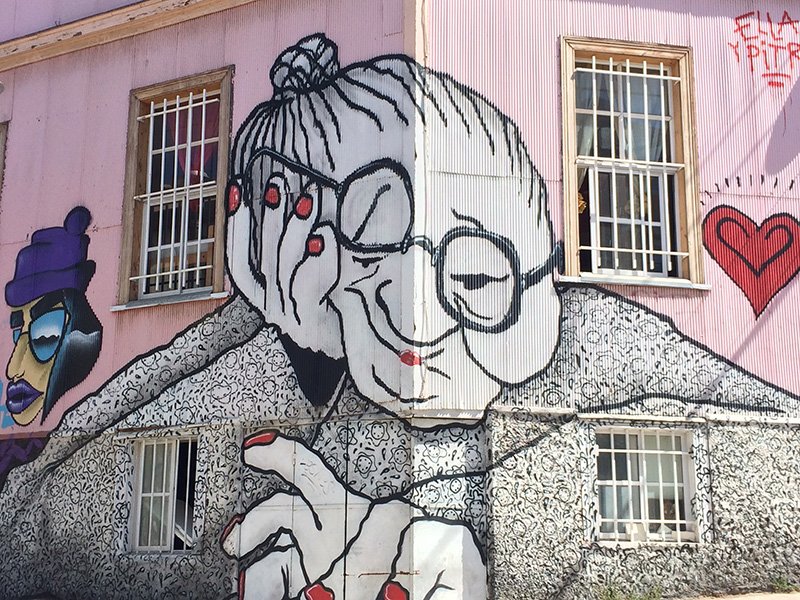
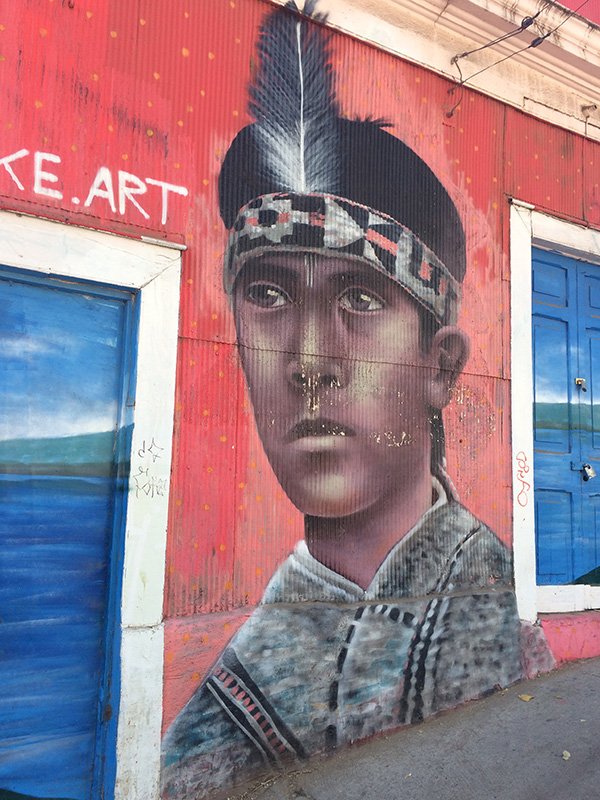
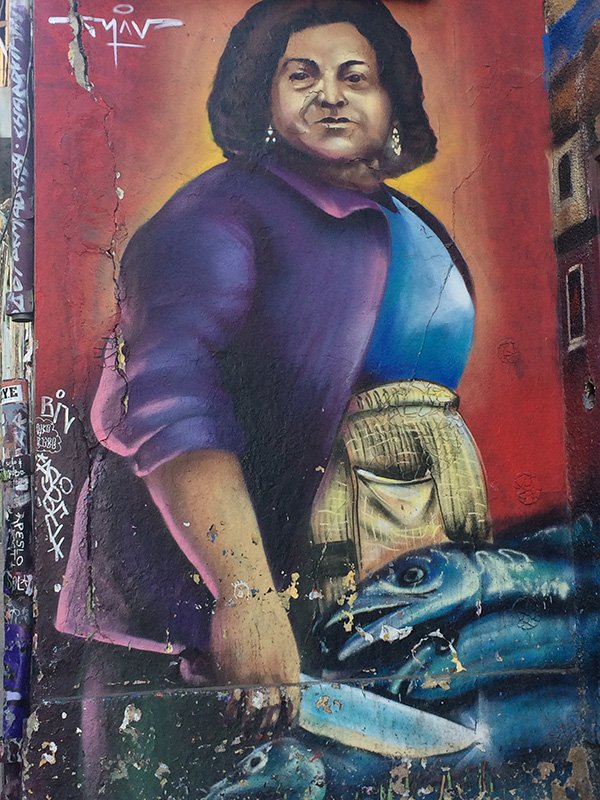
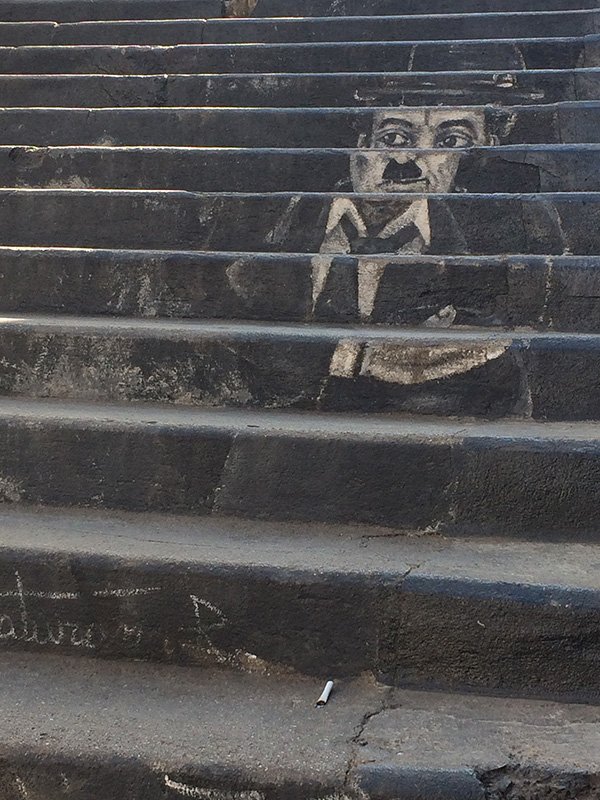
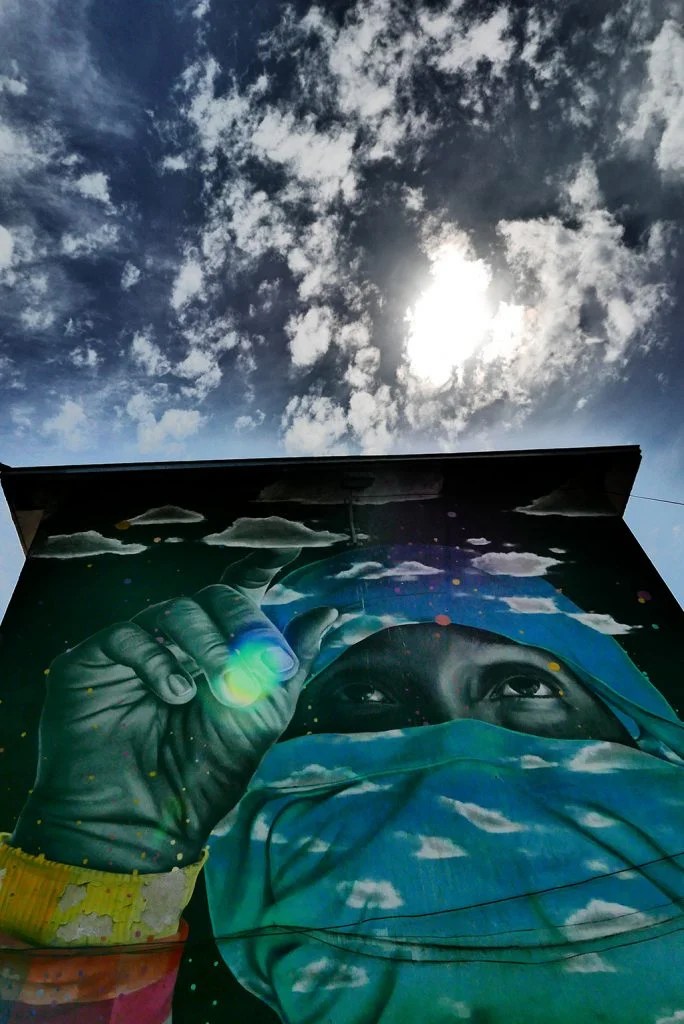
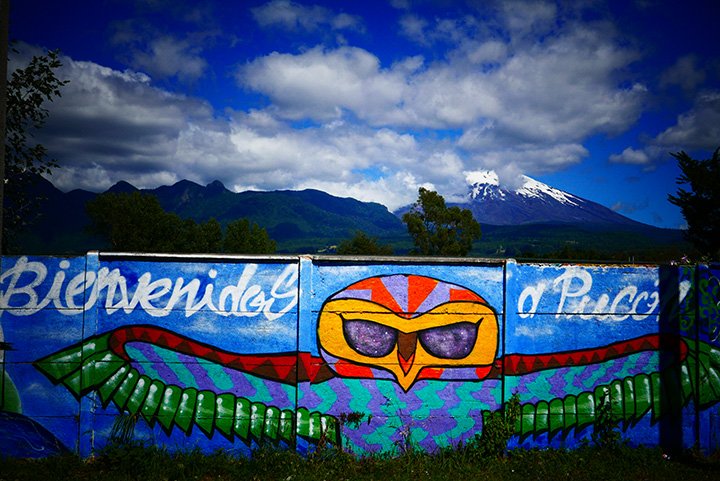
In most towns and cities in Chile you will find graffiti, murals and street art adorning a large percentage of the walls and open spaces. In fact in some Cities, especially Valparaiso, a clean unpainted wall is a much rarer beast and hardly ever seen.

Whilst street art may not be to everyone’s taste, in Chile it seems to be given space to breed and give local artists a voice.

I think partly this may be due to Chile’s repressive past where freedom of speech and expression were supressed during the Pinochet years.

1973

Deep in the collective consciousness of Chileans is the military coup that happened in 1973, which ended up with the death of Salvador Allende and the start of the Pinochet regime, where countless people ‘disappeared’ and a military dictatorship was in power for over 17 years.

Most of contempary films, literature and music seem to focus on this era and you’ll still see graffiti on the streets saying things like ‘Allende’s spirit lives on’.

Sin Quotas

If you need to pay for anything in Chile then you’ll likely to use your credit card and the first question you’ll be asked is whether you’d like to pay ‘sin’ or ‘con’ quotas.

I’m not 100% sure how this works but my understanding is that you have the choice to pay either the amount in full or in installments, which is a unique question to be asked if you’re only buying a loaf of bread.

Propinas

For any meal that you buy in Chile you’ll be asked whether you’d like to pay sin or con ‘propina’, which is a 10% tip that is added to every bill.

In one respect I really like this system as it means you don’t have to figure out how big a tip you’d like to give if the service was good, however, on the flip side if the service wasn’t particularly great, it’s hard not to give a tip when the waiter is staring at you asking if you’d like to give him a tip or not!

Animitas

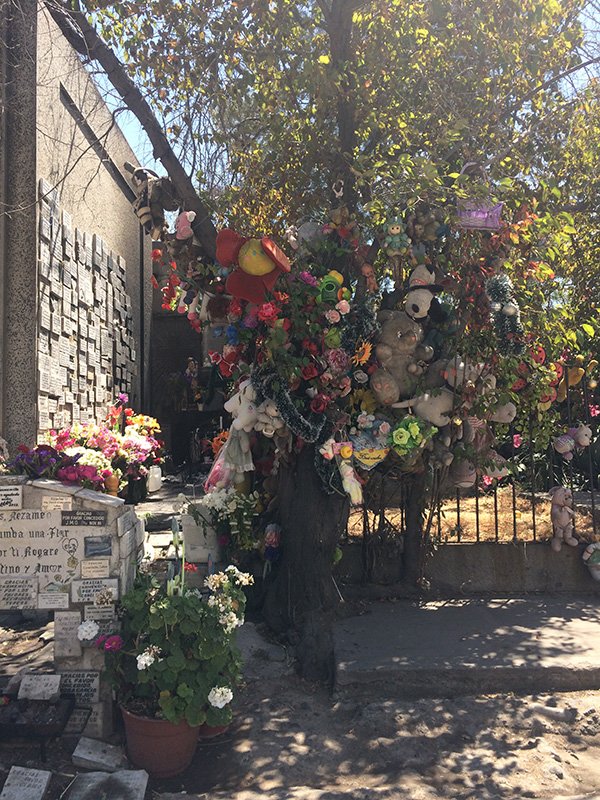
Carmencita – The Santiago Prostitute’s Shrine

All over Chile you will, and particularly on roadsides, you will see shrines that are dedicated to people who have died.

However, if you look closely you will see that some of these shrines are more decorated and full of offerings and thanks than others.

Usually these will be the shrines of people who have died in a particularly tragic way like Carmencita in the Santiago Cemeterio, or the particularly sad case of Julita y Luisita in Valparaiso. In this case a lady was pregnant and as her husband drove her to hospital in a mad rush, he crashed into a wall killing both mother and child, whilst he survived!

In these sad cases people will often come to the shrines and ask for blessings and good luck and you will find notes thanking the animita for helping them. For example in the Santiago cemetery there was a lovely sign from a mother thanking Carmencita for making her son become a surgeon!!!

Whether you believe in it or not these are powerful symbols that you’ll find all over Chile and are worth spending a few minutes to look over.

If you enjoyed this article, then why not PIN IT too:

Filed Under: Travel Tagged With: chile, south-america

5 Unusual Things to Do in Santiago de Chile | Travellers Guide

17th May 2019 By martinos74 Leave a Comment

Welcome to Santiago

Grab a Coffee and an Eyeful in the City Center’s Striptease Cafes

Ok, so they’re not really striptease coffee bars, but to be honest they don’t feel a million miles away from the concept although there is no alcohol and no stripping involved.

In the center of town around Plaza de Armas, and sprinkled across other destinations in the capital are a number of coffee bars, where the concept seems to be to go and drink a nice cup of fresh Chilean coffee, and watch busty girls dressed in very tight tops and short skirts serve you your coffee.

Whoever came up with this idea is a genius, because how he can get away with this in a modern society is quite surprising, although from what I’ve read so far Chilean culture is quite machoistic, which probably explains why.

When my friend first told me about this idea I thought that he was exaggerating, so after persuading my girlfriend that this was genuinely worth checking out in the name of ‘research’, we headed off into town in search of ‘Café Caribe’ and ‘Café Haiti’.

I wasn’t quite brave enough to go into the first bar that we came across but we jumped into the next ‘Cafe Caribe‘ that we found.

The walls were all covered in mirrors, and the bar was raised off of the floor, so that you place your orders at, well… bust height!

We were served some fairly average coffee by a buxsome lass, who to be fair looked like she wouldn’t take and shit from anyone and was a little on the scary side.

Not surprisingly the clientele of the place was mainly middle aged businessmen in their suits, no doubt heading out for a bit of a lunchtime leer and a macchiato.

The whole experience felt a little ‘stripbarey’ uncomfortable to be honest, but its definitely a unique Chilean experience that’s worth checking out.

How To Get There:
Go to any of the stations around Plaza des Armas, walk a few blocks and you’ll come across one of these places.

Who’s it For?
If you’re a non-judgemental man or woman interested in the sociological side of Chile, then stop by and fill your cup.

See the Streets filled with Art at the Museo del Cielo Abierto

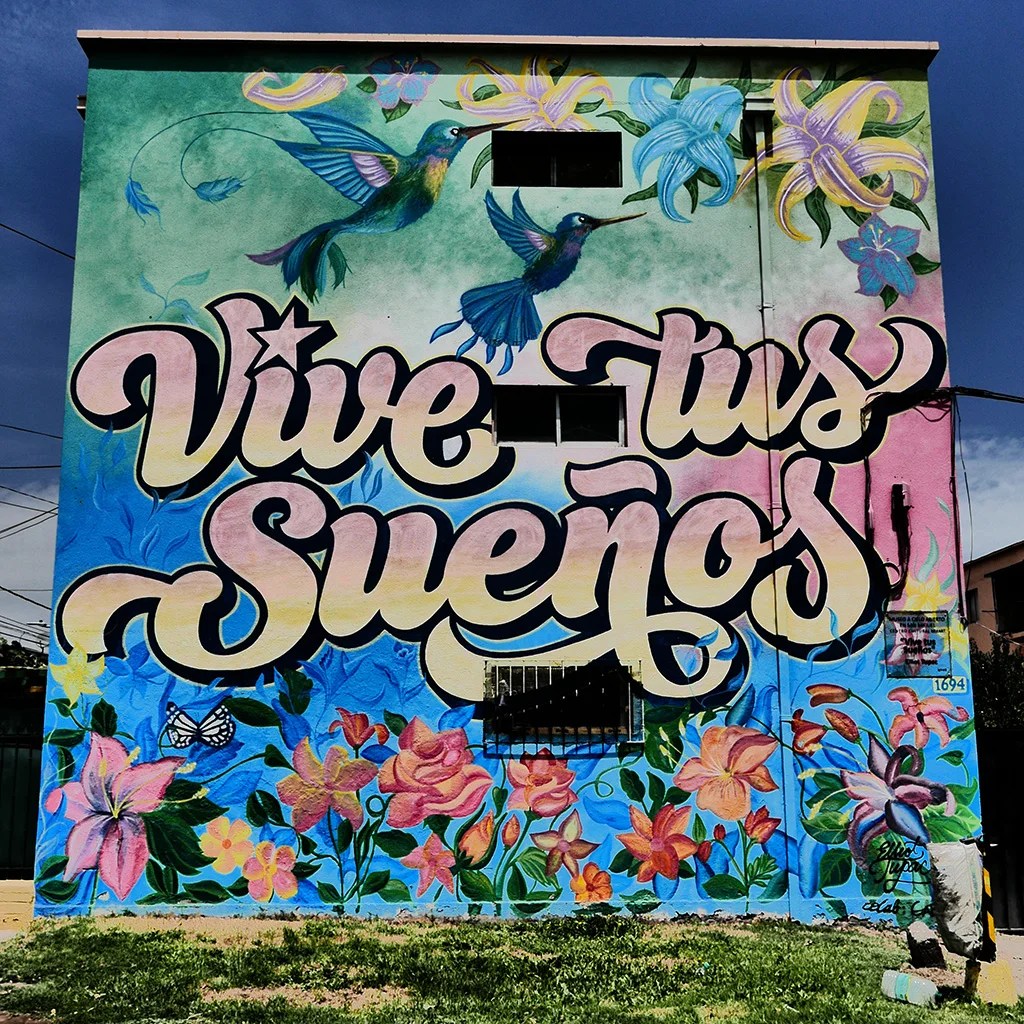
As far as museums go this has to be the top museum that I’ve ever visited, because it was free and outdoors so you didn’t have to suffer the stifled museum air, and was full of awesome works of street art.

The project is based in the San Miguel district of Santiago, which is about a 20 – 30 minute metro ride south of the City. This was a bit of a down-trodden area so the local community decided to do something about this and  let their houses be painted by street artists to improve their environment.

Think of a housing estate with about 10 rows of houses, all of which are 2 stories high. After every 10 houses, a street runs through providing a big empty wall on the ends of each terrace of housing. These empty walls were transformed into art canvasses for street artists who have created nearly a hundred unique works of art in this run down estate.

On they day that we visited there was a street market in operation as well, which gave the place even more atmosphere and meant you could snap photos of passers by and action in the market pretending to take snaps of the street art.

I read somewhere on the internet that you only need 45 minutes to visit this place, but if you want to take some pics as well, then allow yourself a good couple of hours as this place is a photographers paradise.

How To Get There
To get there head to Metro Station Departmental and walk about 10 mins until you see the first house on the block.

Who’s it For?
If you’re into street art and like slightly alternative things, then this is a must see attraction for you.

Walking with the Dead in the Cemeterio

We went on a ‘free’ walking tour of Santiago with the group toursfortips.com, which took in a lot of markets in the working class La Chimba neighbourhood and ended up in Santiago’s main cemetery, which is a few stops to the north of the City.

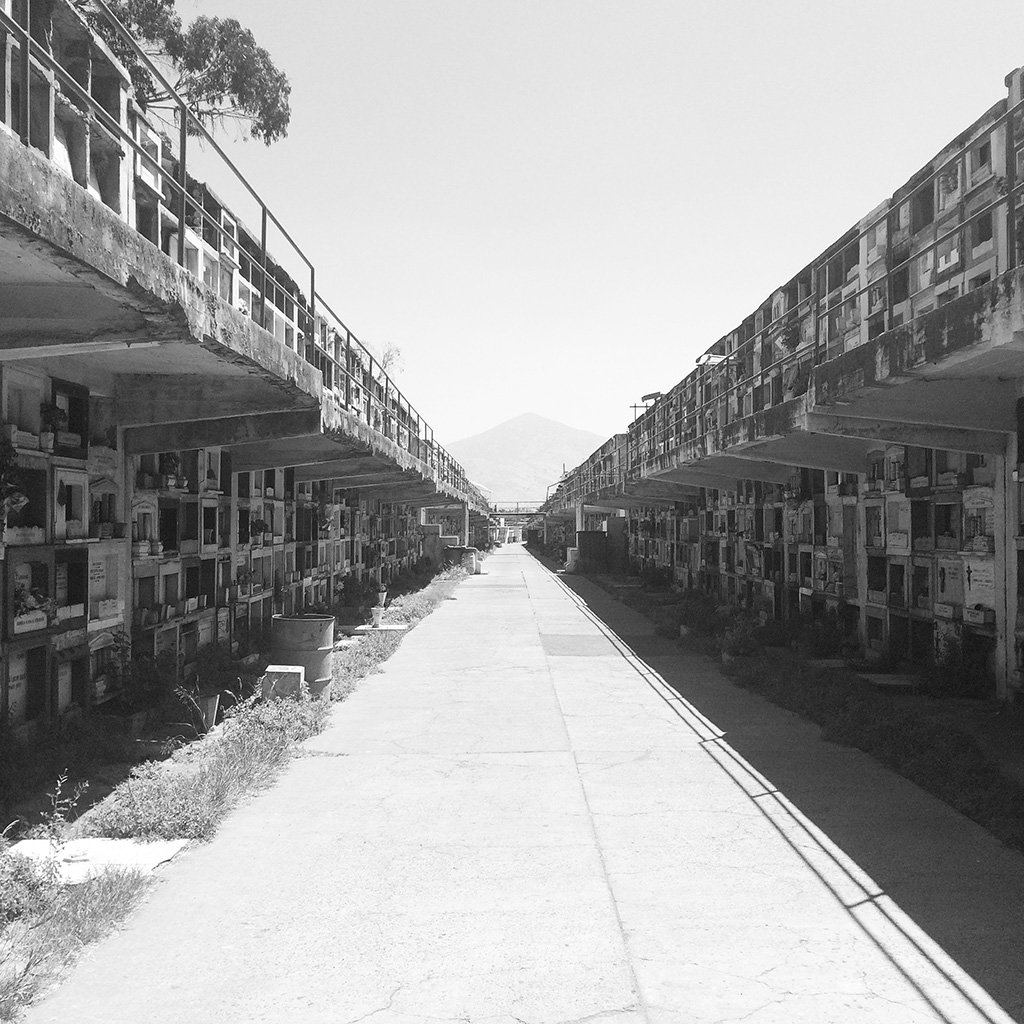
This place is interesting because of the amount of money Chileans are willing to pay to ensure that their loved ones have every chance of success and happiness in the afterlife.

In Chile there’s quite a wide divide between the rich and the poor, which can also be seen in the cemetery.

The ‘poorer’ side of the cemetery are buried in ‘niches’, which are basically slots in a wall that you place the bodies in, rather than being underneath the ground.

You can either rent these niches for $200 a year, or buy outright, which are labelled ‘en perpetuata’ , however considering that the average monthly salary in Chile is just ‘$800’ that’s quite a large amount to pay for your afterlife.

On the other side of the cemetery is where the rich and notaries are buried, including a number of Chilean presidents, and is also the resting place of Chile’s famous socialist President Salvador Allende.

Because Santiago is in an earthquake zone, the option to build really tall mausoleums is out of the question, but instead to show your wealth, the extravagance in decoration of your tomb showed your wealth. This meant you could see shrines with Egyptian themes, Incan temples and lavish carvings.

The other interesting thing in this cemetery is tombs that have been turned into shrines as people have started worshipping them. These ‘animates’, are usually small children or people who died tragically and the belief is that your wish will come true if you give an offering to the dead spirit.

One tomb that we saw was drapped in dolls and teddy bears for a 10 year old girl who had been murdered, but was though to bring good luck to those who asked for help.

How To Get There:
To get there take Linea 2 (the Yellow line) to Cementerios – The entrance to the cemetery is right outside the exit.

Who’s it for:
If you’re interested in politics, history or ghosthunting, then this is right up your street.

Escape the Smog of Santiago and Ride a Bike to a Vineyard

This option isn’t for the budget traveller as it comes with a price tag of $60 per person and you could go and see the wineries cheaper on your own steam if you liked.

However, we wanted to escape the heat of the city and the appeal of riding a bike in the countryside to have a bespoke wine tasting session really sounded appealing.

Getting there was a bit of a pain in the butt as we had to take the metro out of town to La Mercedes and then take an Uber for another 30 mins to
Las Majadas de Pirque but eventually we got to our location where our green bikes were waiting for us.

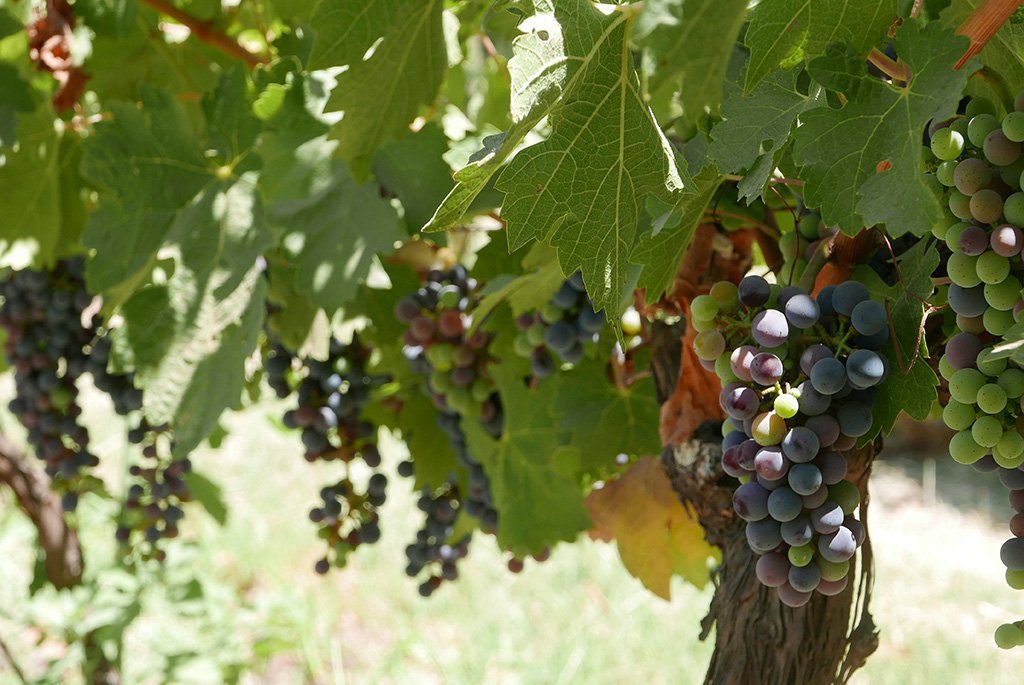
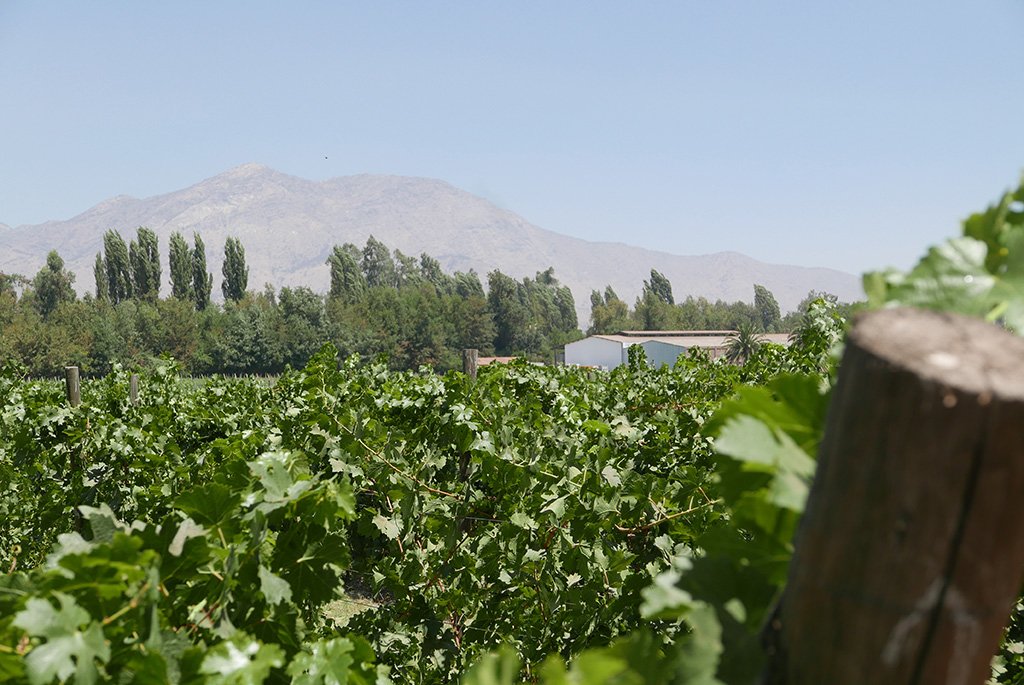
There were only 4 of us on the tour and we sauntered along the roads by the sides of wineries with the smell of fresh flowers in our nose, and the backdrop of the mountain range in sight.

Every few kilometres the guide would stop and give us a bit of information, and then we arrived at the winery ‘William Fevre’, where we could walk around the vineyards were then given a tour of the winery itself.

The tour culminated in a wine tasting session, under a canopy in a beautiful garden on the estate, where we got to sample a Sauvignon Blanc, Malbec, Carmere and Cabernet Sauvignon, all of which tasted freaking fantastic to me. I’m no wine expert but I could definitely tell it was wine, and I liked it!!!

At the end of the tour, we hopped on the wine bus which took us to the Concha y Toro winery just down the road where we tasted another 3 wines each, for about $10 per person and rounded off an awesome day trip.

How To Get There:
Check out the bicicleta verde website for all the info.

Who’s It For:
As their brochure says  this isn’t a tour for wine connoisseurs, cycling fanatics or thrifty people, however, if you’re looking to spend a lazy day getting rosey cheeks on some fantastic Chilean wines, then this is a great choice for you.

Drink and get Drunk with Locals in La Piajera

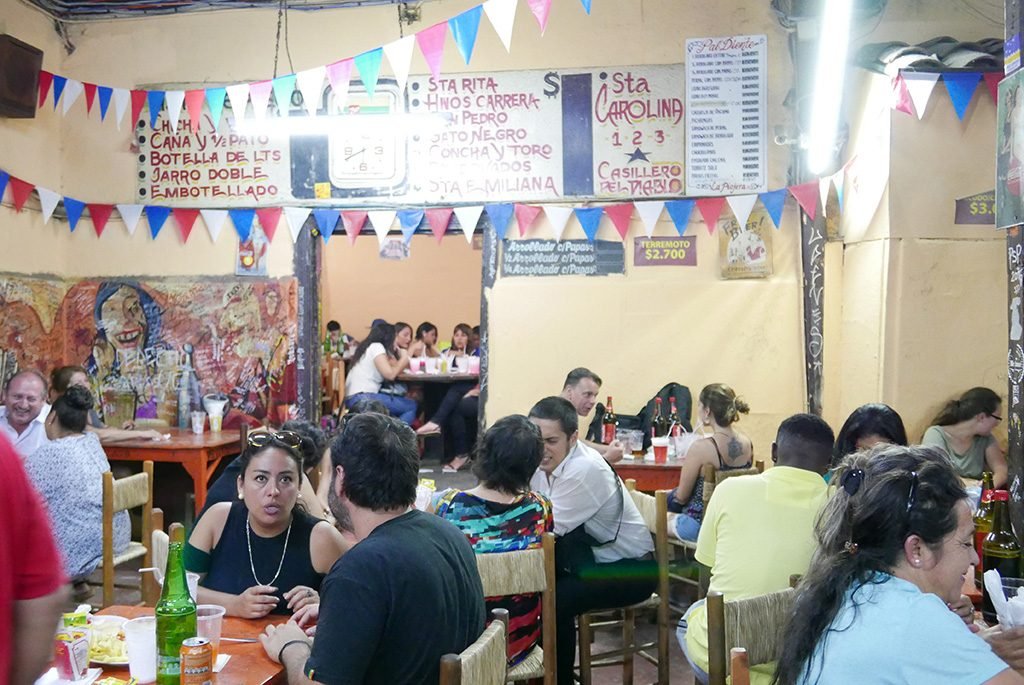
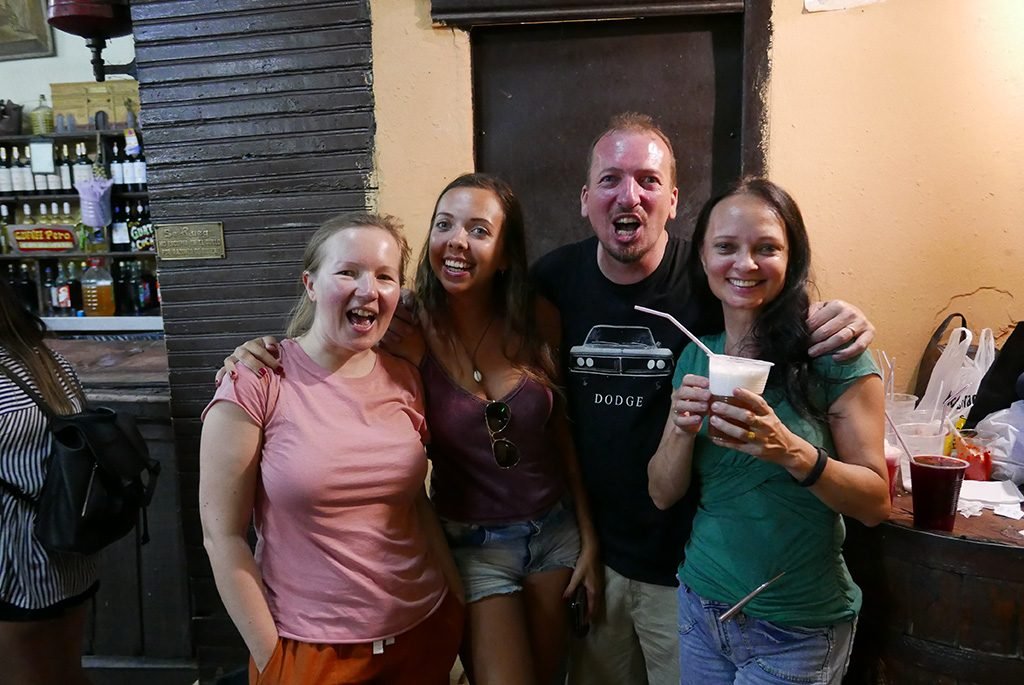
They’ve been serving drinks in this establishment near the Mercado Central for over 200 years and it’s clientele have never been particularly ‘well heeled’. It’s name ‘The Fleapit’ comes from an ex President who was taken for drinks in this place and gave it the name that it’s never been able, nor wanted to get rid of.

This really is a spit and sawdust dive bar, full of ‘enthusiastic’ local characters. From the outside it just looks like a normal bar (although when we arrived there were 3 characters slouching around outside), and when you enter there’s chaos going on in all corners.

There’s about 3 rooms where you can eat and drink but we just headed for the bar and were soon chatting to a Brazilian family who were waxing lyrical about the place. Apparently the last time they were in here they expanded into a group of about 20 people, none of whom they knew before they walked through the hallowed doors.

One of the main reasons why people come here is to experience the legendary ‘Terramotto’ or ‘Earthquake’ cocktail. Legend has it that this was created after the major earthquake in Santiago and all that was left of the shelves was white wine, ice cream, pisco and grenadine, so why not throw it all together in a glass and then see what happens.

Well, they say that 1 is fine, 2 and you will be a bit wobbly, and after 3 the earth really will be shaking, and they’re right. I was very tempted by a third, but sense prevailed and sent me packing after my second, before the earth had a chance to tremor.

How to Get there:
Head to back streets of the Mercado Central
La Piojera, Aillavilú 1030, Santiago, Chile, +56 2 2698 1682

Who’s it for:
If you want to meet some locals, enjoy a good drink and have an open and embracing attitude then this place will be perfect for you.

If you enjoyed readying this article, then why not PIN IT!!!

Filed Under: Travel Tagged With: chile, south-america

A Guide to the Chilean Lake District | Volcanos and Clear Water

16th May 2019 By martinos74 Leave a Comment

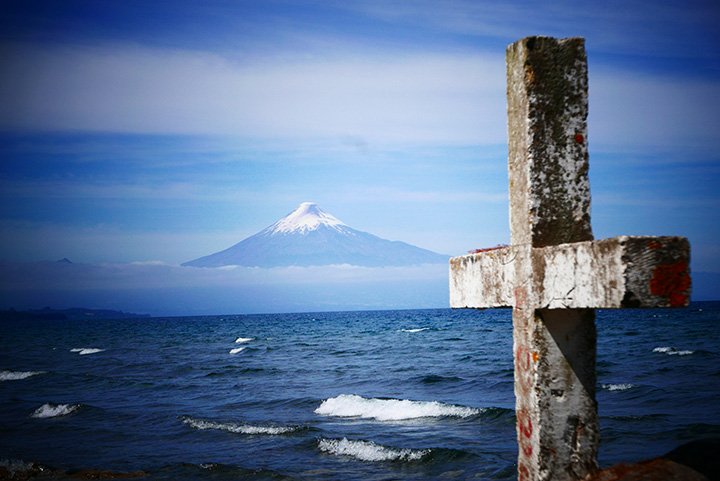
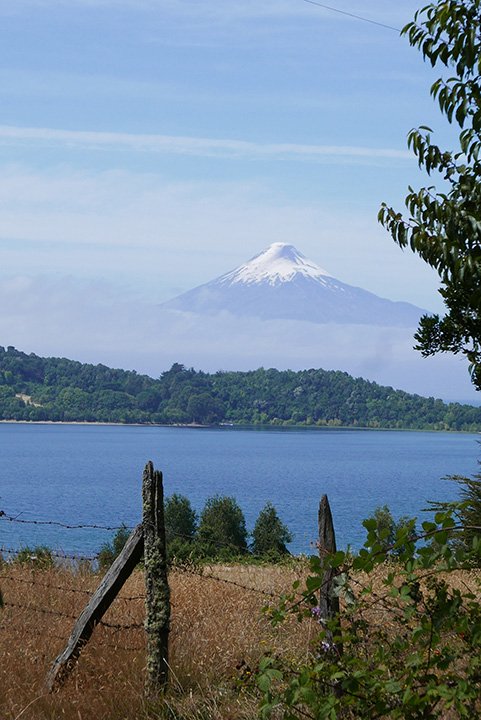
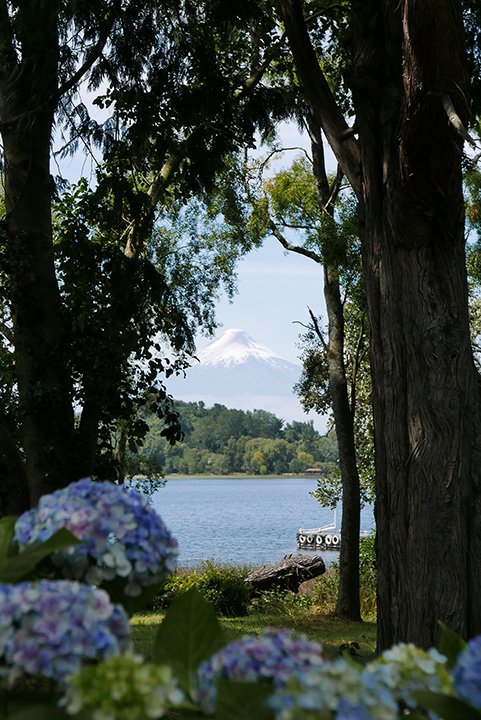
Volcano Osorno, Puerto Octay, Chile

In an area south of Santiago lies the Chilean Lake District, which is peperred with volcanos and crystal clear lakes making it an ideal area for relaxation and outdoor activities alike.

In the article below we take a look at some of the highlights.

Lago Villarrica

The most famous lake in this district is Lago Villarica, which is home to the tourist hubs of Pucón and Villarrica itself.

Pucón

The main hub of the area is Pucón, which attracts hoards of international and domestic tourists especially during the summer months. The most striking thing about Pucón is the proximity to Volcano Villarrica, which looms over the town and is visible from most streets.

Pucón is a good place to stay for a few days if you’ve been out and about in the surrounding countryside as it boasts a plethora of good eating places and cervecerias, which will restore your legs from all of your aches and pains. Pucón is also a great option to use as base to explore the surrounding areas.

There are a number of Day Hikes around in the easily accessbile
Huerquehue National Park and next on the hit list would be to visit one of the numerous Hot Springs in the area.

We opted to go for Termas Los Pozones, which you can easily get to with the twice daily bus from Pucón and are the cheapest of all the springs at a cost of 8000 CLP.

For me, the nicest thing about these springs were that they were set in a beautiful outdoor location next to a river and exposed to all of the elements. There were 5 different pools that you can visit, each of which got slightly hotter in temperature than the next.

Of course, the main attraction in Pucón is the volcano itself and there are scores of tour companies offering you treks to summit the volcano. Usually the trip can be done in about 8 hours, and involves you using an ice axe in some places, a gas mask at the top (as you get to peer into the steaming pit of lava below) and a plastic seat, which you sit on to slide your way back down to the bottom of the volcano.

The main problem with this trip however is having suitable weather conditions as they never go when there is a chance of rain. We stayed in Pucón for 6 nights in summer and were really unlucky as the rains didn’t clear the whole time (until we got on the bus to leave of course!)

Pucón also boasts a long beach where you can swim in the chilly, but crystal clear waters, a harbour and many other outdoor activities such as white water rafting and mountain biking.

One final thing to look out for in Pucón is the ‘Pedalea Pucón‘, which is basically a free bike service provided by the local government and allows you to have a bike for free for a couple of hours to visit Pucón and some of the closer areas, such as the nearby waterfall or Mapuche centre.

Villarrica

On the same lake as Pucón you’ll find Villarrica, which has a completely different vibe to Pucón. Generally, it’s more of a resort for Chileans and in particular Chilean families.

There are less western-style eating options than in Pucón, and the restaurants are more likely to provide huge portions of Chilean food rather than the more bistro-like Pucón.

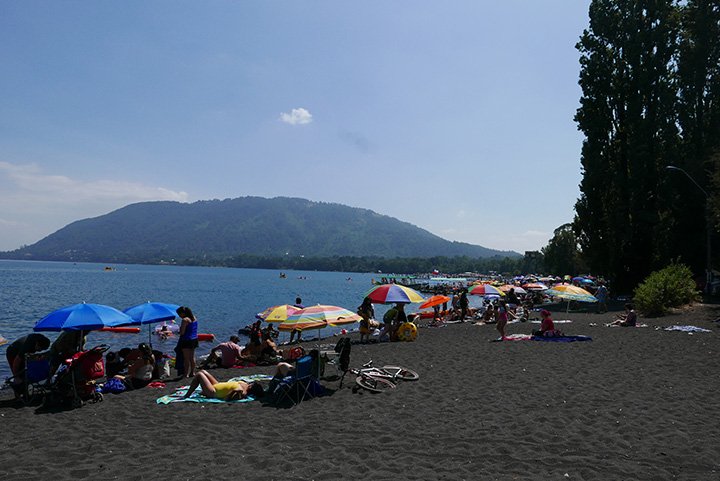
However, we stayed for 4 nights in Villarrica and had a great time. There’s a couple of beaches that you can visit, and I’d definitely recommend swimming in the Lake where you can get views of the volcano as a backdrop, which is pretty awesome.

You can still do excursions from here if you want to use Villarrica as a base, but it’s less geared up for international tourism.

Lago Calafquen

Lican Ray

The other benefit of Villarrica is you can easily take the bus to Lican Ray, which is another Chilean resort and the neighbouring lake. There’s a Mapuche area on top of a hill you can walk around and a couple of beaches to explore, which makes a nice day trip out of Villarrica.

Lago Llanquihue

The lake furthest south in the Chilean lake district is Lago Llanquihue where you’ll find the towns of Puerto Octay and the more famous Puerto Varas.

Puerto Octay

Well, there’s not exactly a lot going on in Puerto Octay, but it’s a wondeful place to spend a few days to recharge the batteries and enjoy the slow pace of a sleepy village by the Lake.

The best thing about this place is the amazing views that you’ll get of Volcano Osorno, which has to be the most spectacular that we saw in the whole of Chile.

There are a couple of walks that you can do around the town, such as heading to the Centinela Penisula or visiting the cemetery for a spectacular view of the volcano.

If cycling is your thing then get on a bike and explore some of the 81 kms of the Llanquihue Lake cycling circuit, which affords simply breathtaking views.

Frutillar

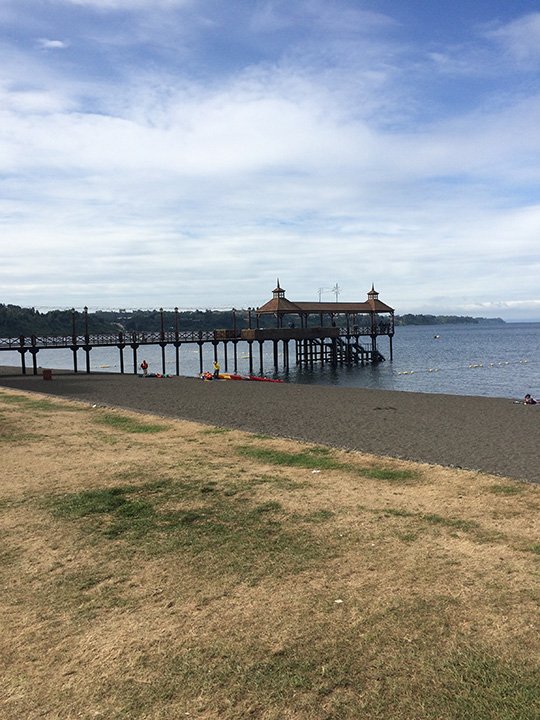
Frutillar Pier

From Puerto Octay you can get to Frutillar for a day trip as it’s only about 45 mins away by bus.

It’s a nice enough town with a strictly German dominance in the architecture and a nice beach to stroll along, but the atmosphere in Puerto Octay seemed more laid back to us.

We never made it to Puerto Varas either, but from what I understand it’s a slightly bigger version of Frutillar with more tourists and more German museums, so if that’s your thang, then go for it!

Other Lakes

There’s at least another 4 – 5 big lakes to explore in this region and plenty of places to stay along the banks. The only thing we struggled with a bit, is we didn’t have a car and couldn’t get to some of the places a bit further afield.

However, even if you only get to visit one of these Lakes in this magnificent area, your journey will have been worth it and you’ll be rewarded with a fresh water lake to swim in with the backdrop of a snow capped volcano… not bad really!!!

If you enjoyed this article, then why not PIN IT as well!!!

Filed Under: Travel Tagged With: chile, south-america

8 Essential Things to Know Before Visiting Chile | Chilean Culture Trip

15th May 2019 By martinos74 Leave a Comment

Chile Tips - 8 Things You Should Know Before Visiting Chile

I’ve just spent a couple of months in Chile, and it sure is an amazing country with spectacular natural beauty, wonderful people and great food and drink, but there are a few things that I’d wish I’d known before my trip…

ATM Withdrawals

Not only is Chile quite expensive, but in order to actually get your money out of an ATM you have to pay crazy charges.

On top of whatever your bank charges you, every ATM will charge you between 4,500 to 6,000 CHP ($7 – $9) every time you withdraw.

The maximum that you can withdraw is only 200,000 CHP, so this is quite a chunk of your spending money going to the ATM vendors.

The good news, however, is that credit cards are widely accepted in Chile and in pretty much every shop, restaurant, bus station or hostel you should be able to pay by credit card, which means you need to carry less cash with you.

They operate either a contactless payment method or a chip and pin method and when you enter your card you’ll be asked to choose ‘sin quotas’ or ‘con quotas’. Basically this means whether you want to pay in installments or not so always choose ‘sin quotas’

Temperature Changes

I don’t think I’ve ever been in a country where the temperature range between day and night can swing so much.

There was a bit of a heatwave going on when we were in Santiago which meant that it got up to 39 in the day, but by the time the evening came this had fallen to just above double figures so fleece and long trousers were needed.

If you’re in Chile for a while then you’ll also need to pack for a full range of seasons. The south gets a lot colder, so you’ll need to pack a warm jacket, fleece, long trousers and be prepared for rain at any point, whereas the further north you get, generally the warmer and dryer it gets as well so you’ll need your flip flops and light Tshirts.

The other thing to note is that the sun is particularly strong in this part of the world and the Ozone layer isn’t in the best of conditions.

Slip on a hat and slap on the sun creme even on cloudly days to avoid the beetroot gringo look. The good news is that sun creme is widely available in Chile and is pretty cheap.

A final thing to mention about Chilean weather is the wind that whips through the country. Particularly in the South and Patagonia there is a fiendishly cold wind that’s going to bite you at some point.

There are a number of days when I’ve been both hot and cold at the same time due to the penetrating sun and the impish wind gnawing away at me, so make sure you’ve got a decent wind proof jacket to hand!

Taxes

In Chile there is a lovely thing called IVA Tax, which is an extra 19% tax that can (and often will) be applied to your accomodation bill.

Theoretically this should only apply to tourists who stay over 59 days in the country but the hotel/guest house must be registered with the Chilean tax authority in order to offer this.

To get this exemption you will also need to pay in cash dollars, but it’s always wise to check at the place you want to stay beforehand to see the situation.

Tips

In most places that you eat or drink you’ll be paying by credit / debit card and will be asked whether you want to pay a tip ‘Con propina‘ or not.

Every bill will have an extra 10% added, which is ‘optional‘ and the waiter/waitress will always ask you if you want to add this or not.

If you don’t usually give tips in your culture then you need to get used to this pretty quickly, or be brave enough to decline the opportunity each time, which is pretty hard to do when the waiter is holding the credit card machine in front of you.

Cost of Travelling

Make Money Online Resources

All I can say is Chile is NOT CHEAP. In fact it’s one of the only countries I’ve been to recently where it’s often more expensive than London.

Accommodation

I think the biggest bug bear for me has been the accommodation prices, compared with what you actually get.

Admitedly we’d been travelling in peak season and didn’t book far enough in advance, however, typically a budget double room has been costing around $50 – 60 a night and a lot of the places we’ve stayed at didn’t feel particularly homely!

Food

An evening meal for two people, with a glass or wine / beer is going to cost you 20 – 30,000 CHP or $30 – 40 although the portions are going to be enough to fill you up for the whole day.

If you’re on more of a budget then look out for the set meals of the day that are served in a lot of the local restaurants. These will usually include a starter, main and dessert and you can get these for as cheap as 3,500 CHP each.

Most places that we’ve stayed in give you access to the kitchen facilities, so if you’re staying for a longer time and money is a bit tight, it’s best to cook your evening meals and take snacks with you on your day trips.

Travel

On the positive side bus travel is fairly reasonably priced, of good quality and fairly regular.

I’ve found that the cost averages at about $2 per every hour that you travel on the bus, which is a relief given the crazy distances you’re likely to travel.

The other option is to fly, and again internal flights in Chile are really competitively priced and often cheaper than long distance bus rides.

Check out LATAM and Sky for low cost airlines in the country, but you’ll find flights for around $15 for every hour that you are in the air, which is great value.

Chilean Spanish

OK, so you know a bit of Spanish do you? Pretty sure you can order some food and ask for directions? Well think again…

My Spanish isn’t great but I managed to travel through the rest of South America and generally have an idea of what was going on, but Chile is another ballgame completely.

Firstly, they speak incredibly fast, and if you ask them to slow down, they’ll repeat the first word slowly then the rest of the sentence at normal speed!

Secondly, the pronounciation is quite unique here with words being shortened and letters being swallowed like there was some kind of famine!!!

Thirdly, Chileans have a distinct vocabulary that you won’t find in other parts of South America for example:

  • Caña – hangover
  • Al lote – disorderly, without rules
  • Al tiro – immediately, right now
  • Luca – 1000 pesos

If you don’t believe me, check out this video below where native Spanish speakers are trying to figure out what they’re talking about in Chile!

You Need A Car

or even better… get a camper van!

Public transport in Chile is good. Within the City and between cities, you’ll find plenty of options to get you around and about.

However, alot of the attraction to Chile lies in its natural beauty and unfortunately, if you want to go and see this, then you’ll either need to jump on a pricey tour (if available) or drive a car to get there.

Most of the national parks are obviously going to be in remoter places away from roads and traffic. In some places you might find a road that goes near to the entrace of the park, but if you want to go trekking then a lot of the trailheads start kilometres within the park itself.

This can be a major pain in the butt as it will add on hours of walking not in the idealic scenery or make it impossible to do the treks.

One option is to try your luck with hitchhiking and particularly within the park most people would give you a lift to the entrance. However, there is always the risk that you spend all day hiking and then can’t get a lift back to public transport and could be stranded in the park… not a particularly appealing prospect given how temperatures can plummit.

For this reason, most people either hire a car, or take a tent with them and stay within the park for a few days.

Unfortunately, I don’t have a driving license so this wasn’t an option for me, and I felt this really limited my options to go and see some of the natural wonders of this country.

Distances

Chile is the second longest country in the world, and don’t forget it!!!

It’s second only by 95 KM to Brazil, which spans nearly the entire continent of South America, so you need to make sure you allow yourself enough time in your itenary to get from A to B or focus on one specific region of the country.

It seems that there are more attractions and diverse natural wonders in the south of the country, but flights are reasonably priced so you could hop around from North to South quite easily.

However, if you’re driving or going overland by bus, then make sure you plan in days of travel. Buses are pretty good and the sceneary is pretty amazing, so just make this part of your journey, stick some music on, sit back and relax!!!

What Must You Do Before you Go to Chile?

  • Bring lots of dollars in cash
  • Pack wisely (Lightweight multi season clothing that is wind proof and a good hat)
  • Prepare for going camping
  • Try and learn some Chilean phrases and vocabulary
  • Make sure you have a valid driving license

If You liked the article, please go ahead and PIN IT!!!

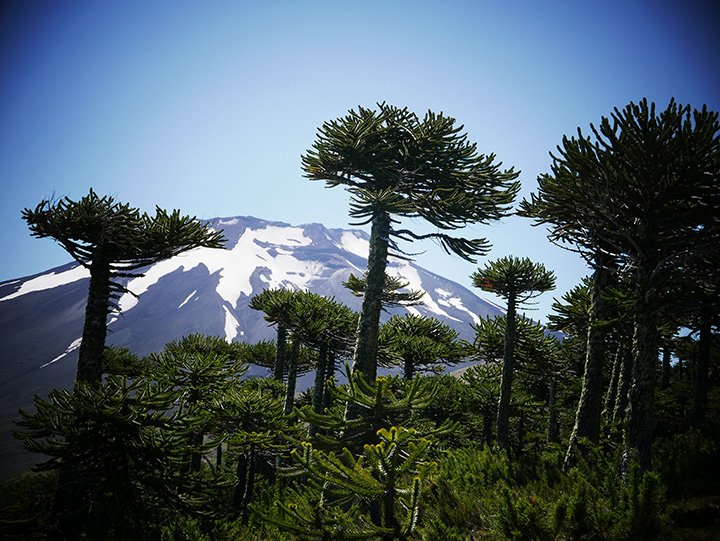
Chile Volcano

Filed Under: Travel Tagged With: chile, south-america

The W Trek, Torres Del Paine : 20 Essential Questions Answered

15th May 2019 By martinos74 Leave a Comment

W Trek Torres Del Paine

I’ve just come back from completing the W Trek in Torres del Paine, which was quite simply one of the best treks I’ve ever done. However, there are a number of questions I had before the trek that I wasn’t sure of and a number of things I would like to have known before starting the trek, which I’ve listed below.

We did the trek from West to East, opted only to take a small day pack with us and go fullboard in a tent at each refugio.

Do I Need to Book all of the Campsites in Advance?

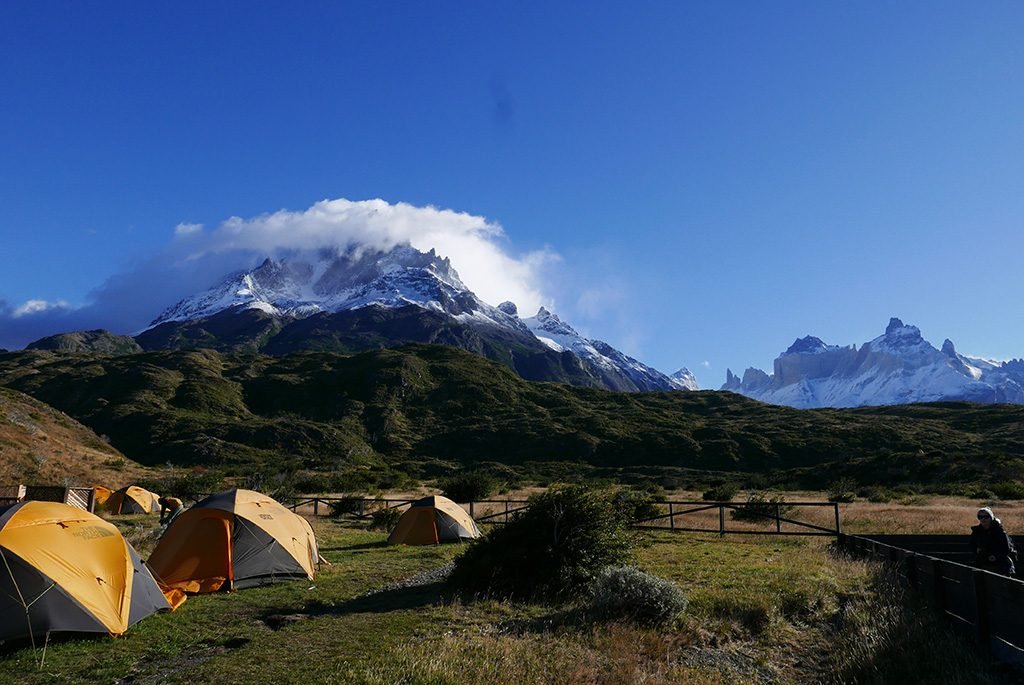
Camping Paine Grande Torres del Paine
Camping Paine Grande

Yes, Yes, and Yes!!! If you’ve done a bit of research already you’ll know that campsites in the peak season get booked up 4 – 5 months in advance so give yourself as much chance as possible to choose where you want to stay on the trek by booking early.

We met lots of people who could only do a small chunk of the trail because of this.

Usually Paine Grande and Central have availability so you could feasible go from Paine Grande to Grey and back one day, then up to Britanico and back the next day, then take the ferry back to get over to Central and do Torres on the final day.

Should I go with a Guide, a Tour or Self Hike?

Again this is totally your preference depending or your budget and who you are hiking with.

In general you don’t need a guide and it’s easy to organise the trek yourself, if you spend a litle time researching.

Should I Carry my own Tent / Food Provisions?

Rented Tents

Personally I am now officially a lazy man and hate carrying anything more than a day pack for extended distances. I find that it really distracts from my enjoyment of a trek and is not something I’m interested in.

Because we booked into a campsite where we had full board and tents / equipment provided we didn’t need to do this and just carried a small backpack with our clothes in, which was perfect for our needs.

However, this came at a cost of about $125 a day. If you’re on a tigter budget then you can still absolutely do this without a huge problem, if you’re fit and depending on the route you take.

Italiano Campsite

The beauty of the W Trek is that for most of the tough climbs (Glacier Grey, Britanico and Torres) you just leave your main backpack at the bottom of the slope and hike up with a smaller bag. This means you can get away with only carrying your main bag on one of the 4 days, which is relatively flat as well.

If you carry all of your camping kit and food as well, this will hugely reduce the cost for you.

However, if you’ve got a bit more money, and like hiking with others in a group then there are plenty of tour operators who will take the hassle away from you, and can be easily arranged in Puerto Natales.

We also met one lady who hired a guide for 8 days to do the O Circuit, but she was on her own so this wasn’t a bad idea, and of course the guide offers immense value by pointing out all the flora and fauna that you may otherwise not know about.

We did actually meet one girl who didn’t have a reservation for the second night of the trek, so she went to Camping Italiano and asked if there were any cancellations. Somehow she managed to blag her way in a got to stay there for a night, but I’d really advise against this as it’s a long walk out of the park if you have nowhere to stay!

What Clothing Should I Bring with Me?

Well, it’s Patagonia so most likely you’re going to have sunshine, rain, clouds and mind numbing wind to contend with all within the space of an hour.

My main advice would be to make sure you have enough layers that you can easily switch in and out of, including:

  • Quick Dry undershirt
  • Middle layer
  • Good quality fleece
  • Raincoat
  • Waterproof trousers

Personally I hiked with the above as well as an extra lightweight puffer jacket on the day treks and a change of Tshirt/light trousers.

Whatever you do, you’re going to smell at the end of the trek, and the condors aren’t particularly into fashion, so just wear the same clothes for the entire trek and get on with it…

A couple of tips we were given before we went were not to bother with a rain cover for your backpack as the noise it makes flapping in the wind will irritate the hell out of you after a while and it is very unlikely to keep your bag dry in Patagonian conditions anyway.

Instead he recommended placing your kit in bin liners inside of your bag, so that the outside of your bag just gets wet. He also advocated not taking waterproof clothing as he’d just hike in one set of clothes that would get wet and bring a nice dry set to change into at the end of each day, but I’m not sure I could face trekking in wet clothes all day myself if it rained.

Which Direction should I do the W-Trek? East to West or West to East?

On the trek we met a split of about 50/50 going in each direction and all with slightly different routes. A lot of the routes (including ours)
were decided by the availability of campsites rather than the optimal route to take.

To be honest I don’t think there’s a huge amount of difference in the direction you take, however, I always like to have a destination/summit at the end of a trek and the main attraction are the Torres, which is why I’d have a preference for going from West to East and summiting the Torres on the last day.

Walking the W Trek from East to West

If you go this route then you do the tough walk up to the Torres on the first day of your hike and unless you stay an extra night at Chileno you won’t be able to make the sunrise.

If you have a big pack then the toughest day will be the next day where you’ll be carrying your big bag for the longest amount of time to get to either Frances or Italiano, which is a 6 – 7 hour hike along the lake.

You’ll also have 2 more tough days on Day 3 and 4 where you hike up to Britanico and Glacier Grey (both about 6-7 hours there and back) although most of this will just be with your day pack unless you’re staying an extra night at Glacier Grey.

Walking the W Trek from West to East

The walk up to the Grey Glacier and back on the first day was actually quite a long day, although totally worth it.

For me the best views and highlight of the trip was going up to the Glacier and seing the crazy colours on the lake. Because we left at midday we had to get a move on and didn’t have as much time as I’d have wanted at the Glacier. It also meant we couldn’t walk to the hanging bridges, which were meant to be awesome. One option would be to book a night at the Grey Refugio, but this is very popular, so you’ll need to book in advance.

Day 2 involves the walk from Paine Grande all the way up to Britanico and down to Italiano or Frances. This is another pretty tough day and whilst the views at the top of Britanico give you a 360 panaroma of the Torres and mountains, you can get a very similar view from the valley below.

Day 3 involves walking to Paine Grande, which was meant to be a lot easier as it is flat and along the lake. However, don’t be fooled as this is quite a long day as well.

Getting up to the summit on the final day is really an experience as well as you are rewarded with a great view of the Torres (weather permitting) poking up out of the lake.

What is the Terrain like?

Be prepared for lots of ascents and descents throughout the hike. Only one stretch of the hike along the lake is ‘relatively’ flat.

Most of the time you’ll need to be watching your feet as you’ll be walking on paths with stones/tree roots sticking out of them, small boulders and tiny streams to walk in.

It’s going to be pretty hard going so make sure you have a hardy pair of shoes/walking boots and find yourself a good stick.

Are the Walking Times Accurate?

We walked with a small backpack and stopped to take lots of photos and the times were pretty accurate for us.

Remember you want to leave yourself enough time to take breaks, enjoy the views and take a few snaps so always allow for a bit more than the allocated times.

Should I Take Hiking Poles?

I’ve never been a big fan of hiking poles in the past but after twisting my knee at the end of the first day, they would have been a massive benefit and I think essential if you’re carrying a big pack.

There are lots of steep descents and they will really save you a lot of discomfort on your knees if you have them. In the end I found a great stick that was my saviour and got me around the last 3 days of the trek, but a pair of hiking poles would have really come in handy too!

Are the Paths Clearly Marked?

Most of the time we found the paths to be really easy to follow and there are plenty of maps around.

We made a couple of wrong turns but generally you will see either a post or a splash of paint on a rock / tree which indicates you’re on the right path.

The rules are simple, if you don’t see one of these markings for a while then retrace your steps until you do.

That being said, there were people attempting to hike in the dark in order to see sunrise, which isn’t allowed, and personally I wouldn’t have liked to have done the trek in the dark as the paths would be a lot harder to find.

How Crowded will it be?

We went at the start of March, which is still just about high season and to be honest it wasn’t as bad as I had heard about.

Yes, you will get annoyed by people not letting you get passed them and yes, you will get annoyed with people trying to get passed you but if you start with the mind that you’re not going to be out there on your own then you should be ok.

The only part for me where it felt too overcrowded and touristy was when we were up at the Torres where people were queieing (myself included) to get selfies and photos from the best spots, but I guess that’s kind of unavoidable as well.

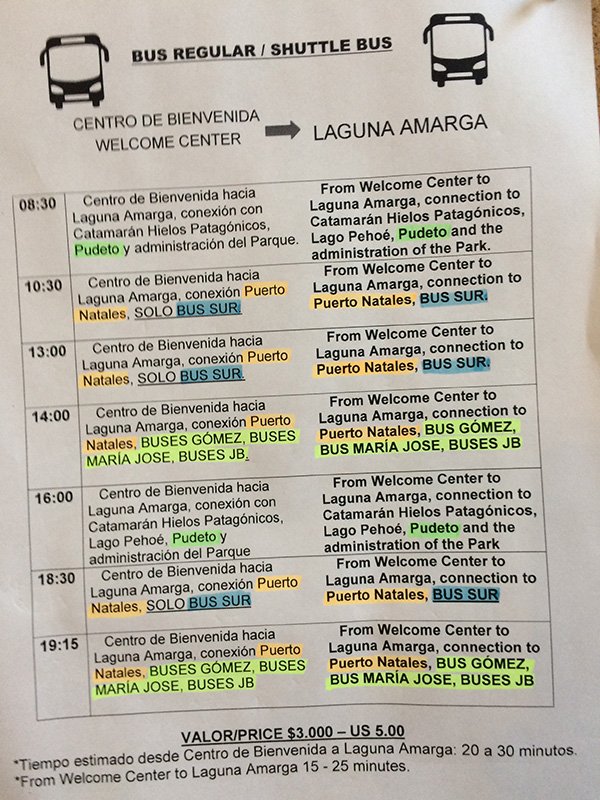
How do I get to the Park?

2019 Bus Timetable

There are 2 entrances to the park. If you start in the West you will need to get a bus to Pudeto and in the East to Laguna Amarga.

Tickets cost $15000 CLP return, however, you should try and book your tickets a few days in advance if you can especially in the high season.

There are 2 or 3 different companies running, so make sure you plan your trip so that you can leave at the time you want.

For example we booked via our hostel onto a company called Gomez who don’t have an early morning bus back, which meant we had to pay an extra transfer on the way out. It was only a few dollars, but could be a bit of a pain if you can’t get onto another bus at the time that you want.

Another tip is if you have a few hours to kill at Laguna Amarga there is a nice flora and fauna trail you can do, where you’ll see loads of Guanaco and maybe a Puma.

Do You Need to Buy Park Tickets in Advance?

No, you don’t and the only option is to buy them when you enter the park for $20000 CLP

Do You Need to Take Your Own Water / Water Tablets?

No, the water from the streams on all of the routes is probably the cleanest you’ll get in the whole country as it’s often coming direct from the glaciers.

The campsites also have taps to refill your bottles so no need to spend out on filters/tablets.

Are there any Rubbish Bins on the Trail?

No, the simple rule is that anything you bring into the camp, you need to bring out of the camp as well, apart from toilet paper, which is provided in the campsites.

Where can I find a Reliable Weather Forecast for the W-Trek?

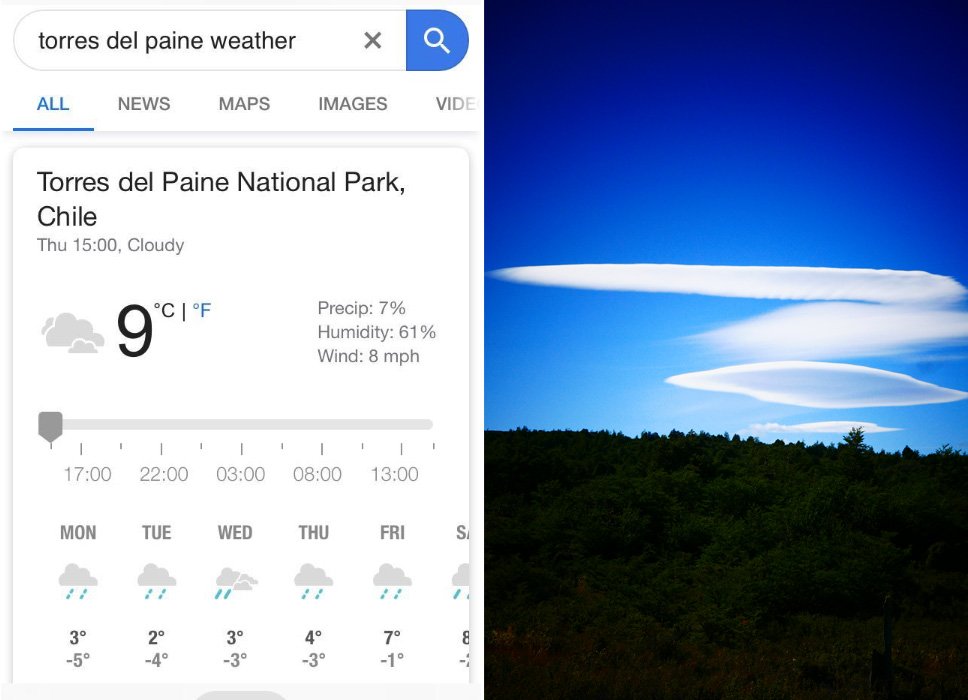
The short answer is that you can’t. Try 5 different weather sites and you will get 5 different weather forecasts.

For example before we went the weather forecast showed that it would be up to -5 at night and raining the whole time, whereas the weather we actually got was 4 days of sunshine and clear skies:

Locals say that the only people asking for weather forecasts are the tourists, because the locals just prepare for all different kinds of weather instead.. it is Patagonia after all.

However, on the trek itself most of the campsites will have a weather / visiblity forecast for the next day, which is probably your best source of information.

What was the Campsite Food Like?

  • Breakfast – was a standard South American breakfast of bread, jam, cheese and ham, with some sweetened juice and Nescafe, and usually we got eggs as well.
  • Lunch – includes a roll, nuts, a grain bar and a juice or orange.
  • Dinner – was a 3 course meal with a soup, meat and rice and a small desert.

If I were doing the Trek again I wouldn’t bother with the packed lunch and would just take lots of nuts, dried fruits and snacks to munch on through the day.

Can I Smoke on the W Trek?

No, absolutely not given the fact that the park was nearly destroyed on 3 occassions by separate fires caused by humans. The only place you can smoke are at designated places on the campsites.

Can I Drink Alcohol at the Campsites?

Yes, there’s no rule against this and each of the campsites we went to had it’s own bar.

A beer cost about $6000 CLP and a glass of wine about $4000 CLP, apart from Central that had an offer of $7000 for a bottle of wine, which we leapt at!

Should I go to the Torres for Sunrise?

Sunrise Colours at Torres del Paine

Wow, that looks amazing doesn’t it… and if you are lucky enough to get this kind of view then I congratulate you, but you may want to take a few things into consideration first of all…

If you stay at Chileno you will need to get up a couple of hours before sunrise to make it to the top in time.

If you stay at Central, then you shouldn’t even think about this as it will take you 4 hours at least, you’ll be doing it in the dark and it’s going to be dangerous. On top of this it is actually illegal to walk any of the trails when it is dark.

However, we met some people who went up one day before us, saw a glorious sunrise and came home happy.

On the day that we went up we saw lots of people coming down from the summit looking tired, wind-beaten and not particularly happy either as it had been totally cloudy.

When we arrived in the early afternoon it cleared to have a beautiful clear view of the Torres, but they wouldn’t have seen this.

Check the weather conditions at your campsite first to decide whether you want to take the risk or not.

What are the Highlights of the W-Trek?

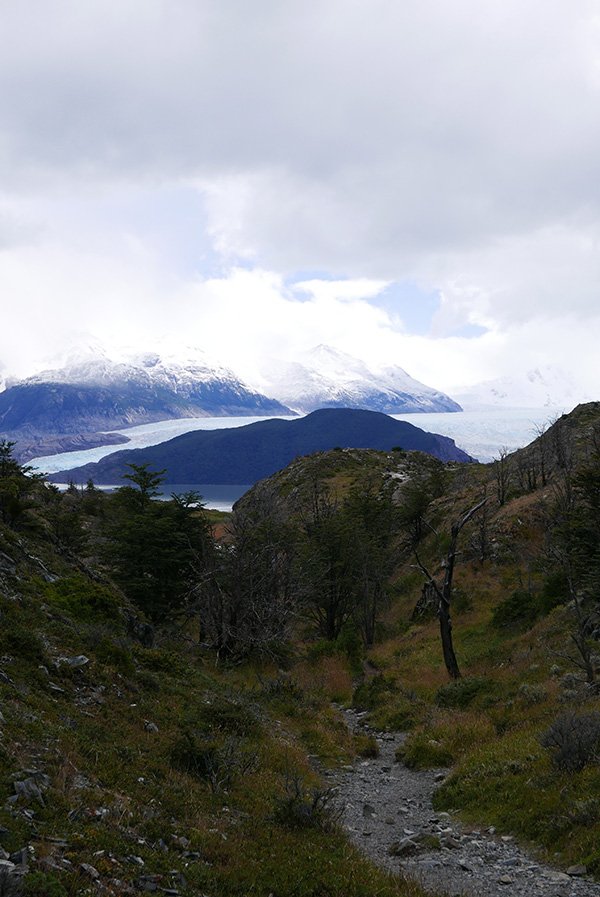
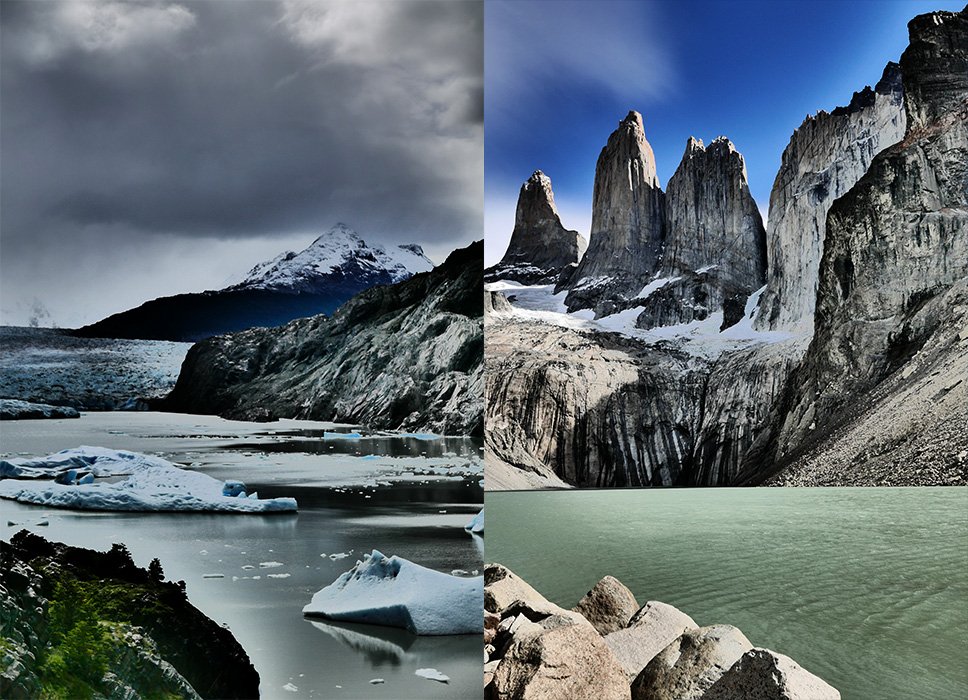
Most of the Trek is pretty spectacular, but if I had to choose 2 highlights for the trip then it would have to be the amesome Glacier Grey and the view over Lago Grey that you get when you walk down to the Glacier.

Secondly the Torres themselves are absolutely spectacular and well worth the leg bending hike up to see them, even though there will be loads of selfie-taking tourists up there.

3 Pro Tips before Hiking the W-Trek

Attend the 3pm talk

Every day in Puerto Natales at 3 pm there is a talk at Erratic Rock, where an experienced guide will give you a detailed run down on all you need to know about both the Circuit and the W Trek.

It’s free to attend an well worth the time before you head off onto the trail.

Watch out for Rats

If you’re camping and have any food supplies with you then make sure that you hang them from a tree and that they are not accessible at ground level as it’s likely that a mouse/rat will get to them.

We even had a sealed bag of nuts inside of the tent, inside of 2 bags and some animal gnawed through the tent and the bags to get to them! The night before they even decided to eat most of my plastic water bottle, which was really stupid of them, but I guess there’s no counting for taste.

Plan your Route

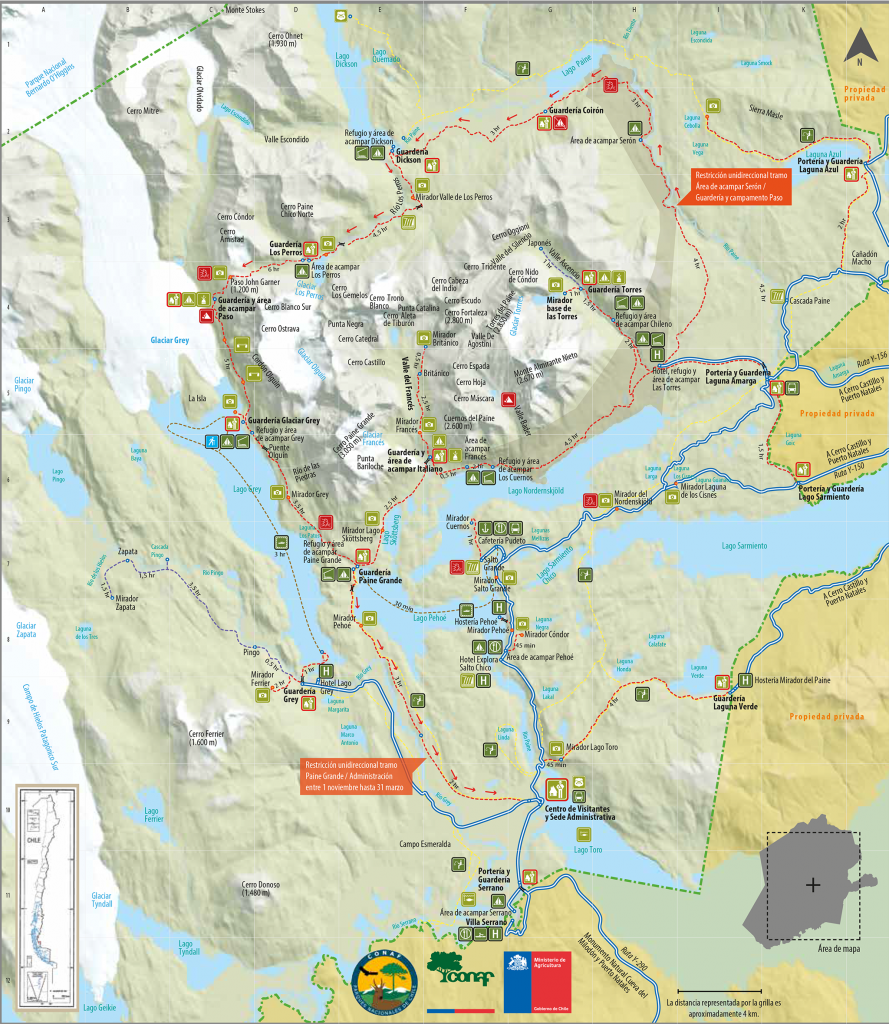
Torres del Paine Map

Particularly if you are taking your own equipment with you you will need to properly plan out what you can feasibly achieve each day.

Check for where you can leave your big bags, times that buses arrive and depart and the distances for each day. Due to the rough terrain I wouldn’t recommend much more than 8 hours of the guide time walking each day unless you’re super fit.

You can download a full version of this map here

Our W-Trek Route

There are a myriad of different ways that you can do the W-Trek depending on your bookings, speed and fitness. The route below is the way that we took, and it provided a pretty balanced 4 days of hiking even though our legs were still pretty sore at the end of it!

Day 1 – Grey Glacier and Paine Grande

Glacier Grey
  • 7 am bus from Puerto Natales to the catamaran stop ($15000 CLP return fare)
  • 10:45 Catamaran to Paine Grande ($21000 CLP)
  • 11:45 Check into Paine Grande and leave smaller items in the tent
  • 12:00 Walk up to the Grey Glacier and back – This is approximately 8 hours there and back, with an option to walk onto the hanging bridges, which unfortunately we didn’t do as we didn’t have enough time before sunset.

Day 2 – Paine Grande to Camping Frances

Mirador Britanico Torres Del Paine W Trek
Mirador Britanico

After breakfast at 8am we checked out at about 9.30 and headed on the first leg of the day to Camping Italiano. This took us just over 2 hours to complete, and was fairly easy going around the side of the Lake with a bit of an incline.

During this stretch in particular you can see the full extent of the fire from 2011, which devasted 40% of the park.

For me the dead, spikey, silver trees everywhere added something to the dramatic landscape, and strangely enough gave you a better view of the lake and area around than you would have got if trees were there.

If you’re hiking with a big backpack you can leave it at Italiano and then hike up to Britanico via Valle Frances. This will take you at least 3 hours each way and the path is made up of small rocks, streams and a really steep incline.

On the way up you will hear large explosion sounds and if you look closely enough at the mountainside you will see the mini avalanches that are happening all the time.

If you’re not feeling too fit then you could stop at Mirador Frances where you get a pretty awesome view of the area as well. We walked further on up to the summit at Britanico where you get a 360 view of the back of the Torres and other mountains nearby.

The final part is pretty steep and at the top is a pretty nice place to chill out, eat your lunch and get some great selfies, but the views aren’t that much better than lower down the slope, so don’t feel so bad if you can’t make it all the way to the top.

By the end of this day my legs were really feeling it and the descent would have really been great to have some walking poles, and I really wasn’t happy at Camping Frances when I found out the restaurant was right at the bottom of yet another hill!!!

Day 3 – Camping Frances to Central

Lago Nordenskjöld W-Trek, Torres Del Paine
Lago Nordenskjöld

This day was meant to be the easiest day along the flat and a little shorter than the other days.

The first part of the trek heads to Camping Los Cuernos, which is a really nice (relatively) flat walk alongside the lake, over a couple of beaches.

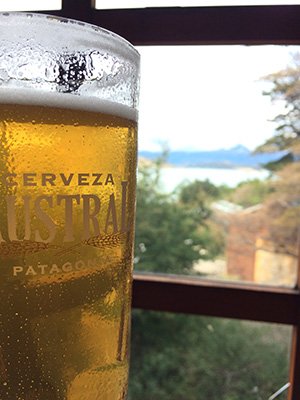
You’re accompanied the whole way by sights of crazy dead trees again and the insanely turqouise colour of the water. This part only took us just over 1.5 hours to complete so we stopped at the campsite and had an amazing Shopp (Draft Beer) of Calafate Ale…

The next stretch to Central should have take us just over 4 hours, but we dropped a jacket on the way so had to backtrack a couple of kilometres, which just extended out day!

The highlight of the day was definitely when we dropped into a valley and had a fly pass of about 10 condors, which was just awesome.

The lowlight of the day would have been when we first got a site of Camping Central, it looked like it was only 15 minutes away, but was actually more like an hour and fifteen minutes, which really tested my aching legs!

Camping Central was a lot bigger than Frances as it’s a lot more accessible. The food was ok, but the best news was that wine was on offer for 7000 CLP…

Day 4 – Summiting Las Torres

Las Torres

This day is all about ups and downs again and is going to take you about 8 hours total walking time. There were a lot more people about on this day as it was a Saturday and you also get a lot of day trippers just heading up to the summit.

I found the path for this trek to be a lot better as there were less boulders and stones and you just had the steep inclines to deal with. The most difficult part was the final hour up to the summit, where you think you’ve reached the top but realise you need to scramble up a really steep path, over big boulders and slippery shale.

When we got the top the view was pretty awesome as the final cloud cleared from the third cuerno and we had a completely clear view (apart from the scores of people taking selfies) of the cuernos and the beautiful turqouise lake beneath it.

Take your time at the top, find a nice spot and relax with a wonderful view (weather permitting!) and remember to save yourself some energy for the descent, which is going to take you another 3+ hours.

Ask Me Anything

If you’re about to go on the W Trek and still have some answered questions then ask me anything in the questions below and I’ll try and give you a helping hand!

If you liked this article, the please go ahead and PIN IT too!!!
Filed Under: Travel Tagged With: chile, south-america

Next Page »

Martinos Digital Ltd - Dyne Road, London, England